
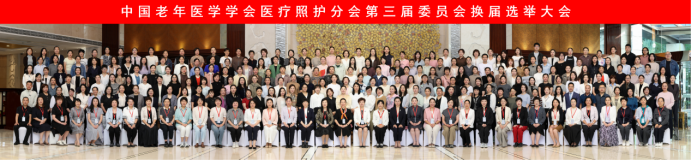
The third committee election conference of the Medical Care Branch of the Chinese Geriatrics Society was successfully held
On September 13, 2026, the third committee election conference of the Medical Care Branch of the Chinese Geriatrics Society was grandly held in Beijing. This conference was held in a hybrid format of online and offline, successfully completing all the agendas for the election of the new committee's leadership team, standing committee members and committee members. A total of 457 experts and scholars in the field of elderly care from all over the country and candidate members of the third committee of the branch attended the meeting.
Yu Zhen, vice president of the Chinese Society of Geriatrics, read out the approval document for the branch's term change. Professor PI Hongying, the director of the Branch's preparatory committee for the change of term, comprehensively reviewed the achievements of the branch's work over the past five years and made a special report on the relevant work of the preparatory committee for the change of term. Vice Secretary-General Zhao Jicheng of the Chinese Society of Geriatrics read out the "Report on the Qualification Review of Candidates for Committee Members" and the election rules of the conference. This term change conference was presided over by Professor Zhang Lingjuan.
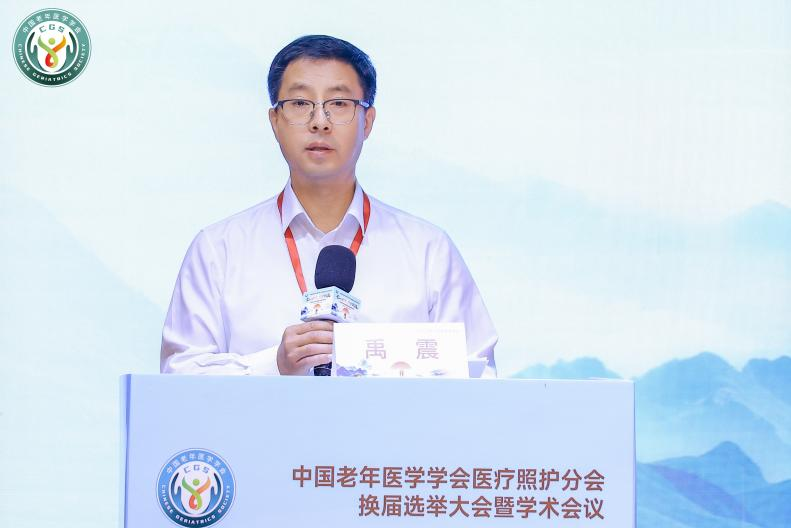
Vice President Yu Zhen read out the approval document for the branch's term change
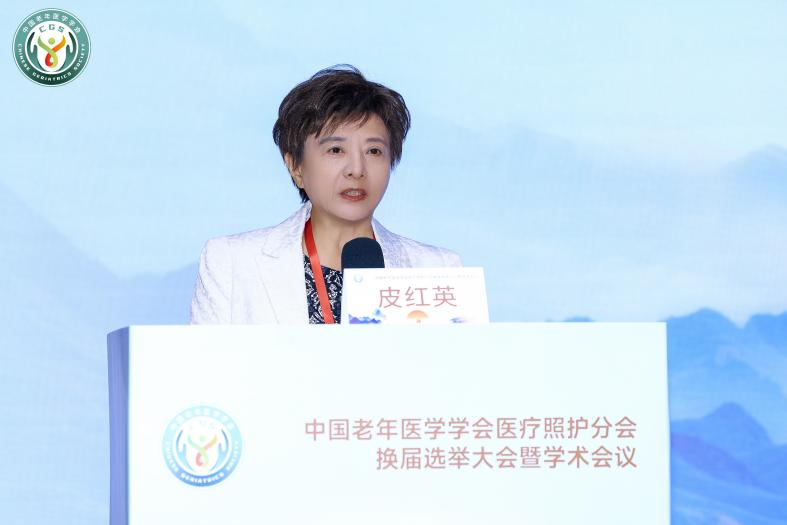
Professor PI Hongying summarized the work of the past five years and made a special report on the preparations for the change of term
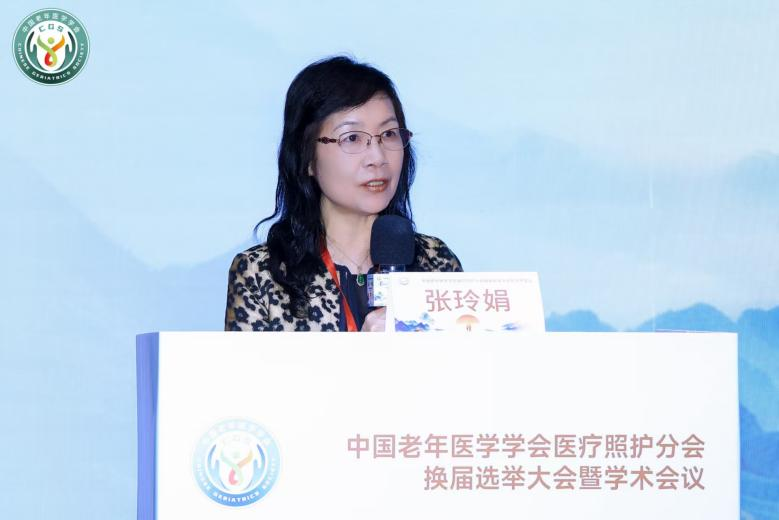
Professor Zhang Lingjuan presided over this election meeting for the change of term
At the election of the conference, Professor Hou Huiru from the General Hospital of the People's Liberation Army was elected as the chairperson of the third Committee of the Medical Care Branch of the Chinese Geriatrics Society. Zhang Lingjuan, Hu Xiuying, Guo Na, Jing Liwei, Shi Haiyan, Liao Xiaoyan, Luo Mingqin, Wan Huan and Cong Yue were elected as deputy chairpersons. Professor Hou Huiru, the chairperson, nominated Shi Haiyan as the general secretary of the branch, and Cao Li, Chen Wenyao, Zhang Xiaopei, Hu Qin, Wang Xinxin, Liu Li and Wang Xiang as deputy general secretaries of the branch.
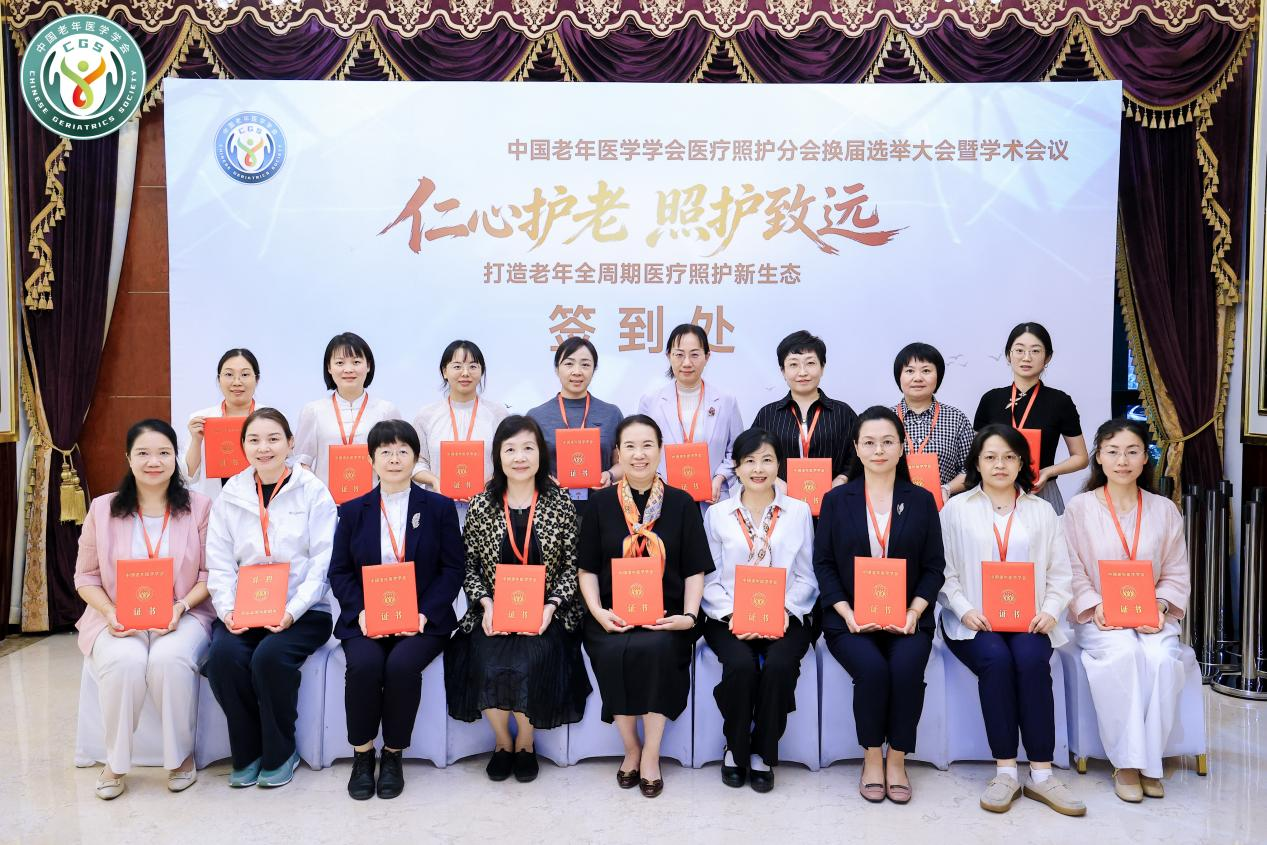
A group photo of the leadership team of the third committee of the branch
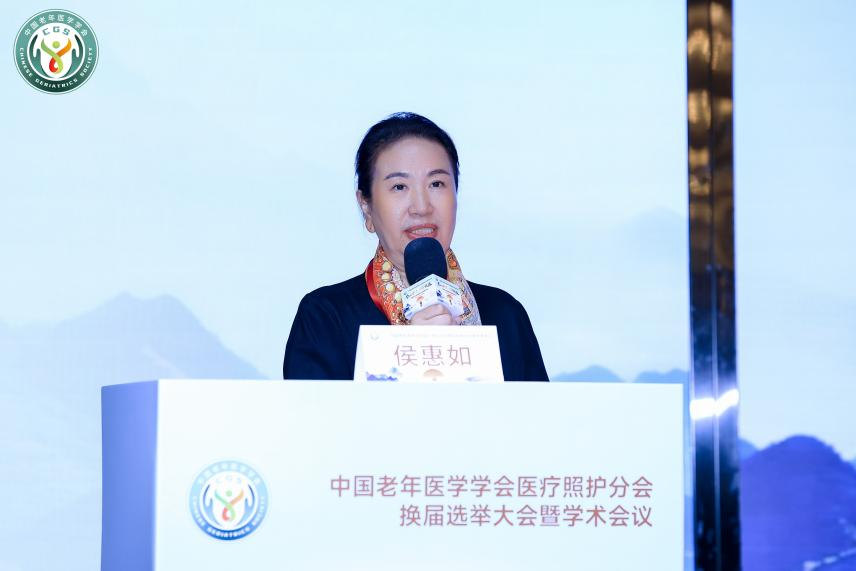
Chairperson Hou Huiru made plans and arrangements for the key tasks of the branch in the next five years
At the meeting, Chairperson Hou Huiru made a systematic plan and comprehensive deployment for the key tasks of the branch in the next five years, and put forward clear requirements and earnest expectations for all committee members to fulfill their duties and take on responsibilities. After the meeting, the first chairperson's working meeting of the third committee of the branch was held to further refine the work requirements, clarify job responsibilities, and solidify the division of labor among personnel. Special arrangements were made for the implementation and advancement of key tasks in the next stage.
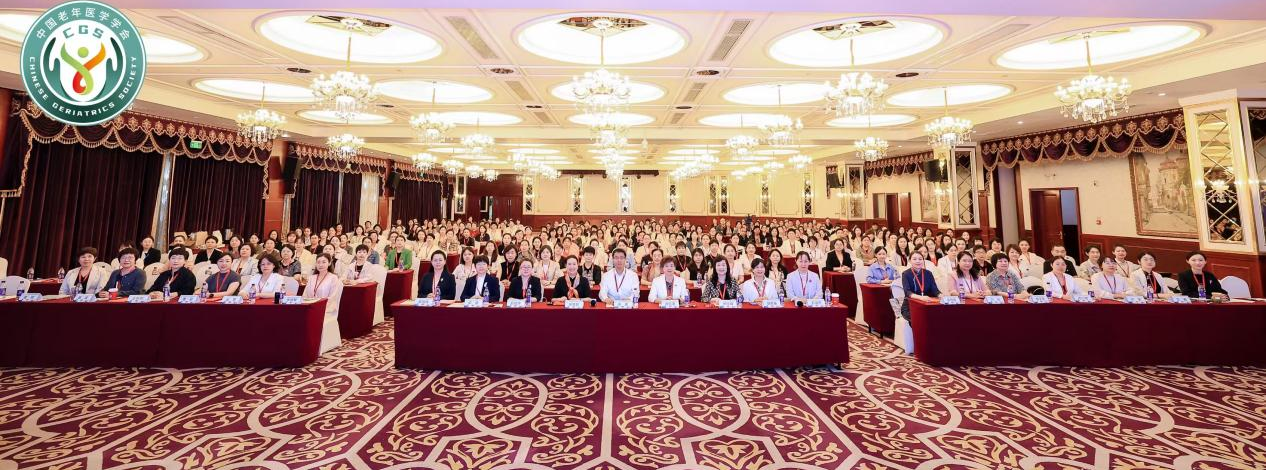
Subsequently, the experts attending the conference conducted a high-level academic exchange under the theme of "Caring for the Elderly with Benevolence, Long-Term Care, and Creating a New Ecosystem for the Full-Cycle Medical Care of the Elderly". Based on the realistic background of a deeply aging society, they jointly discussed the cutting-edge directions and industry development trends in the field of elderly medical care, reached a consensus, and gathered strength. It has provided strong academic support and direction guidance for the relevant work.
The successful convening of this term change conference marks that the Medical Care Branch of the Chinese Geriatrics Society has stood at a new historical starting point and embarked on a new chapter of continuous efforts and high-quality development. In response to the national strategy of proactively addressing population aging and the new requirements of building a Healthy China, the branch will, under the leadership of the Chinese Society of Geriatrics, take Party building as the guiding principle, focus on the overall development of the aging cause, gather expert forces in the field of elderly medical care across the country, strengthen academic guidance, industry collaboration, standard support and talent cultivation, and deeply engage in academic research and expand exchanges and cooperation. We will continue to improve the full-cycle medical care system for the elderly, strive to build a new highland for elderly medical care, and contribute professional wisdom and strength to promoting the high-quality development of elderly medical care in China and facilitating healthy aging.