

Summary of the Roundtable Meeting on "Taking Policies as the Guideline and Weaving a Tight Network for Stroke Prevention and Control
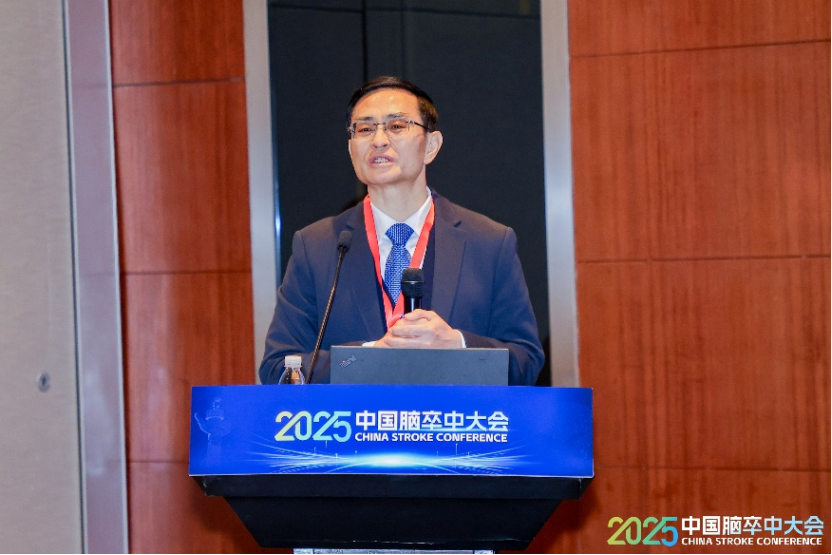
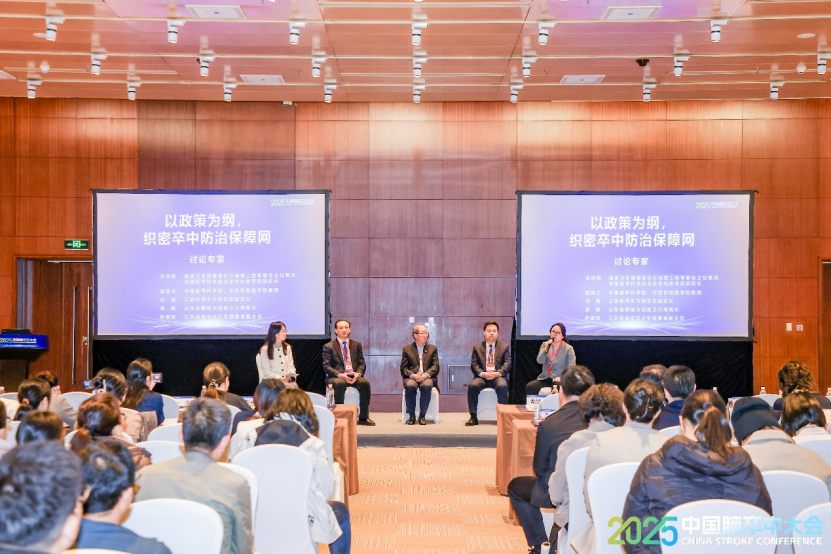
The 2025 China Stroke Conference was successfully held at the National Convention Center in Beijing. Among them, the sub-forum of the "Stroke Identification Foundation Strengthening Action" attracted over 200 scholars and experts to attend. To further promote the prevention and control of stroke, it is necessary to move from the stage of advocating concepts to the stage of local systematic implementation under policy guidance. The sub-forum of the "Stroke Identification Foundation Strengthening Action" also specially organized a roundtable meeting with the theme of "Taking Policies as the Guideline and Weaving a Tight Stroke Prevention and Control Security Network", focusing on core issues such as policy coordination, multi-dimensional governance, and innovative models. Academician Ji Xunming, Director of the National Health Commission's One Million Disability Reduction Project Special Committee and President of the Chinese Academy of Medical Sciences and Peking Union Medical College, Professor Shao Ruitai of the Chinese Academy of Medical Sciences and Peking Union Medical College, Deputy District Head Bai Wei of Xiangdong District, Pingxiang City, Jiangxi Province, and Director Zhang Gang of the Health and Family Planning Bureau of Guan County, Liaocheng City, Shandong Province Deputy Director Zhong Chongyang of the Health Commission of Haian City, Jiangsu Province, participated in the roundtable meeting. The roundtable meeting was presided over by Xia Haibo, the chief editor of the Health News.
At the beginning of the discussion, Academician Ji Xunming delivered an opening speech on the strategic positioning of stroke prevention and treatment in our country. He emphasized that stroke prevention and control must move towards "forward intervention and proactive prevention", truly implementing the risk identification, health management and intervention system at the community and population levels. Prevention is the most cost-effective and most in line with the national conditions strategy. He pointed out that strengthening the foundation is not about advocating a concept, but rather about establishing a verifiable and operational capacity building mechanism at the provincial specialized committee, specialized alliance and grassroots system levels, promoting the true deployment of expert forces, training and empowering the grassroots level, so that the grassroots level is not just about "receiving and referring patients", but becomes the first-line capacity unit for stroke identification and prevention and control.
At the same time, Academician Ji Xunming proposed that we should adhere to "answering Chinese questions with Chinese data". Relying on platforms such as the National Million Disability Reduction Project, the Chinese Academy of Medical Sciences, and the National Medical Center for Neurological Diseases, scientific research is organized around the real needs of our country to form technologies and solutions that can stand up to verification, be available at the grassroots level, and have controllable costs, so as to accumulate evidence support for the formation of stroke prevention and treatment strategies that are in line with national conditions.
Experience of Xiangdong District, Pingxiang City, Jiangxi Province
Background: Pingxiang City is a prefecture-level city in Jiangxi Province, with a population of approximately 2 million. The permanent resident population of Xiangdong District in the city is about 300,000, and those aged 60 and above account for one quarter of the total population. In recent years, Xiangdong District has achieved remarkable results in stroke prevention and control by establishing a chronic disease management system covering the entire district, strengthening the emergency rescue network, and promoting the downward allocation of medical resources.

Deputy District Head Bai Wei of Xiangdong District, Pingxiang City, Jiangxi Province: Before the reform of the close-knit county medical community was carried out at the end of 2022, the proportion of deaths from circulatory system diseases among all causes of death in our district was as high as 47.15%, and the combined prevalence rate of underlying diseases closely related to stroke, such as hypertension and diabetes, exceeded 40%. Analyzing the root cause, it is mainly due to the fact that for a long time, due to the backward facilities and equipment, weak medical service capabilities, and the shortage of professional talents and other practical reasons, counties and districts, especially towns and villages, have almost been all-round backward in the prevention and treatment of stroke. The management of risk factors is rather rough, the ability for early identification and diagnosis is weak, the emergency referral process is not smooth, and rehabilitation and follow-up management are absent.
To change the backward situation of stroke prevention and treatment at the grassroots level, we have taken the construction of a close-knit medical community in the county as the breakthrough point, seized the opportunity of integrating the responsibilities, interests and service systems of district, township and village medical institutions, and explored a Xiangdong experience to firmly hold the bottom line of stroke prevention and treatment at the grassroots level through the model of "grid-based foundation and emergency and chronic disease coordination".
Based on the original three-level system of district, township and village, Xiangdong District has incorporated grids (village groups) and villagers themselves into a five-level grid system. It has embedded the management of hypertension and diabetes into the grassroots grids, established demonstration villages for chronic disease management and promoted the "self-management group for chronic disease patients" model, namely: Management teams are established based on the residential clusters. The team leaders have received standardized training and are equipped with uniformly provided Bluetooth blood pressure monitors and blood glucose meters. They are responsible for monitoring and mobilizing the blood pressure and blood glucose measurements of patients nearby, ensuring that the indicators can be monitored and controlled to meet the standards. Based on this, we have also developed a simple and user-friendly chronic disease management information platform in accordance with local conditions. It can receive automatically uploaded data, issue early warnings for abnormal data, and conduct hierarchical monitoring of data. It connects to district-level hospitals at the top and patients themselves at the bottom. At present, 66 chronic disease demonstration villages have been built in the entire district. 264 full-time and part-time grid workers have been put into work, and 600 sets of equipment have been deployed. The number of people under standardized management has increased from 11,000 to 42,000, and it is expected to exceed 50,000 by the end of the year. Since the launch of the emergency network construction in 2023, the number of thrombolysis cases has increased from the expected 6 to 60, the median DNT has shortened from 66 minutes to 37 minutes, and the average ONT has decreased from 205 minutes to 137 minutes.
Bai Wei said that in the specific prevention and control work, frontline medical staff have made tremendous efforts. From being initially misunderstood and unrecognized, they gradually transformed into being accepted and needed, and gained a sense of professional achievement from successfully screening out high-risk stroke patients, thus forming a virtuous cycle.
The experience of Guan County, Liaocheng City, Shandong Province
Background: The permanent resident population of Guan County, Liaocheng City is approximately 700,000. In recent years, its stroke prevention and control work has achieved remarkable results, and a comprehensive prevention and control system covering the entire chain has been established. In September 2023, it was approved as one of the first batch of pilot areas for the "Healthy China Stroke Identification Initiative" nationwide and the only one in Shandong Province.

Zhang Gang, director of the Health and Family Planning Bureau of Guan County, Liaocheng City, Shandong Province: Guan County has formed a full-chain promotion model covering education, capacity, screening and management in stroke prevention and control. After serving as a member of the "Healthy China - Stroke Identification Action" in September 2023, the county has focused on the following key tasks.
First, focus on popular science education and publicity. The County Health and Wellness Bureau, in collaboration with relevant departments and townships and sub-districts, has painted over 2,900 slogans and hung banners on urban and rural main roads, squares, shopping malls, etc. Organize medical institutions to produce short videos such as "Guanxian Talks about Stroke", and promote them through online platforms like wechat official accounts. At the same time, organize 100 medical experts and train 108 staff members to form a publicity team to popularize knowledge about the prevention and treatment of stroke. In light of the fact that the elderly are the main high-risk group for stroke and the elderly in Guan County are fond of Yu Opera, in collaboration with the County Bureau of Culture and Tourism, the Liyuanchun champion team was invited to create Yu Opera, Shandong Quick Book and other theatrical works with the theme of "Stay Away from Stroke". These works were then performed in villages and communities through the "Bringing Plays to the Countryside" program.
Second, focus on enhancing capabilities. Under the guidance and assistance of the leading unit, Liaocheng Brain Hospital, we have optimized the greenway construction of two stroke centers and one stroke unit, reducing the average DNT time from over 45 minutes to less than 37 minutes. Second, the capabilities of medical staff in the two stroke centers in stroke identification, treatment, and application of stroke maps have been enhanced. As a result, the reperfusion treatment rate has increased from 50.5% previously to 62.4%, and the usage rate of stroke maps has reached 100%. Third, 1,740 rural medical workers were also trained. Taking Xinji Town Central Health Center as a pilot for thrombolysis at the grassroots level, more than 200 thrombolysis surgeries have been carried out.
Third, focus on screening and prevention. First, we will carry out the "Blood Pressure Awareness Campaign for Those Over 30", embedding the "First Visit Blood Pressure Measurement" program into the medical system of county and township medical institutions. In addition, starting from 2024, we organized 18 primary medical institutions to form a working team and launched a door-to-door blood pressure measurement campaign for residents over 30 years old. Second, on the basis of conducting health check-ups for people aged 65 and above, the county's finance will allocate 4 million yuan in 2024 to provide free physical examinations for all permanent residents aged 60 to 64. Currently, physical examinations for people aged 55 to 59 are also being carried out, and the screening work for stroke is being continuously advanced.
Fourth, focus on health management. A special health management information platform for Guan County has been developed to assess the follow-up of rural doctors on chronic diseases such as hypertension and link it to the distribution of basic public health service subsidies. Meanwhile, a village health map was developed to provide rural doctors with information on the distribution of patients with chronic diseases such as "three highs", and to assist in providing follow-up services.
Experience of Haian City, Nantong City, Jiangsu Province
Background: Haian City, a county-level city under the jurisdiction of Nantong, Jiangsu Province, has a permanent resident population of over 800,000. In recent years, Haian has established a three-level stroke prevention and control system that links the city, town and village levels. It has completed about 400,000 screenings and reduced the thrombolysis time to 37 minutes.

Zhong Chongyang, deputy director of the Health Commission of Haian City, Jiangsu Province: Haian City has built a full-chain stroke prevention and control network that runs through the "city - town - village" three-level linkage, including "village-level sentinel points, township-level screening, county-level treatment, and municipal-level support". It took eight months to screen 410,000 people over 30 years old, with a screening rate of 60% for the target population. Haian City has promoted the full-chain closed loop of stroke prevention and control from risk identification to treatment and rehabilitation through grid-based forward touchpoints, process-oriented integrated treatment and information-based support management.
At the village level, the health clinic, serving as a "heart and brain health outpost", conducts initial screening, follow-up visits and data entry for risk factors, becoming the "nerve endings" where the "One Million Disability Reduction Project" reaches out to residents. The town-level epidemic prevention and control stations provide integrated services including screening, chronic disease management, emergency rescue and rehabilitation, and they are key nodes connecting grassroots hospitals with municipal hospitals. Municipal hospitals are building stroke disability reduction centers, optimizing green channels, achieving integrated and coordinated pre-hospital and in-hospital treatment, and strengthening internal collaboration within the medical community.
Zhong Chongyang stated that through "forward identification, hierarchical management, and continuous intervention", Haian has achieved full-cycle coverage from prevention, screening, treatment to rehabilitation management, laying a practical foundation for truly breaking through the "last mile" of stroke prevention and control at the grassroots level.
Roundtable Meeting Summary

In his summary, Shao Ruitai, a renowned public health expert in China and a professor at the Chinese Academy of Medical Sciences and Peking Union Medical College, stated that the successful practices of Xiangdong, Guan County and Guanxian County are very impressive, but they also bear the unique resource, cultural or governance characteristics of each region. This also suggests that local governments should fully consider regional diversity when formulating corresponding policies. Whether it is chronic disease management or stroke prevention and control, a complete chain of "discovery - intervention - assessment - improvement" must be constructed with systematic thinking. The effectiveness of a policy does not lie in its louder slogans, but in whether it can be implemented at the mechanism level, process level and execution level, and whether it can transform "visible practices" into "retained capabilities" and turn phased highlights into sustainable governance capabilities.
After the meeting, a consensus was reached on the spot: Strengthening the foundation is not a short-term project but a long-term capacity building. The prevention and treatment of stroke is not merely the responsibility of the medical sector, but rather requires the establishment of a continuous and regular mechanism within the governance and implementation systems. The guests attending the meeting believe that in the next step, efforts should be continuously made in policy connection, capacity allocation, tool implementation and data accumulation, so that the real problems at the grassroots level can be seen and responded to, and the mature experiences of different regions can truly enter a "replicable and scalable" path.
The meeting ended, but the work continued. The focus in 2026 is not to prove "why we should do it" again, but to continue to do "what we can already do" deeply, thoroughly and solidly. (Contributors: Xia Haibo, Wang Ying
Prev
【 Meeting Notice 】 Lung Healing in Unison - Exchange Meeting on Full-Process Management, Diagnosis and Treatment of Lung Cancer
Next
The Fifth Academic Conference of the General Practice Branch of the China Geriatrics Society was successfully held, featuring empowerment, active guidance, and functional protection to enjoy a happy silver age