
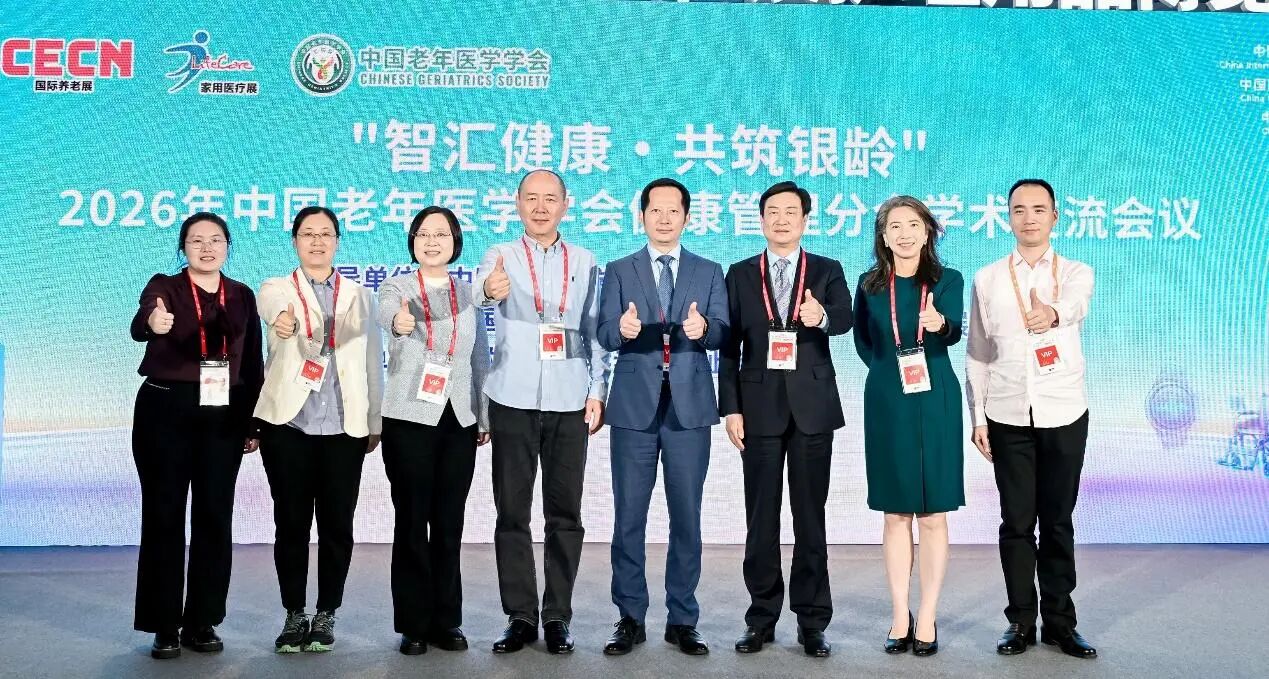
The Health Management Branch of the Chinese Geriatrics Society held the "Intelligence Converges for Health, Building a Silver Age Together" 2026 Academic Exchange Conference of the Health Management Branch of the Chinese Geriatrics Society
On April 11, 2026, the 2026 Academic Exchange Conference of the Health Management Branch of the China Geriatrics Society, themed "Intelligence Converses for Health, Building a Silver Age Together", was successfully held at the National Exhibition and Convention Center (Shanghai), hosted by the Health Management Branch of the China Geriatrics Society and organized by Civil Affairs Vocational University. This conference aims to thoroughly implement the national strategies of Healthy China and actively responding to population aging, deeply explore the coordinated path of policy innovation and industrial upgrading, promote the organic integration of health and elderly care policies, industries and education, and provide solid support for building a modern health and elderly care service system with Chinese characteristics.
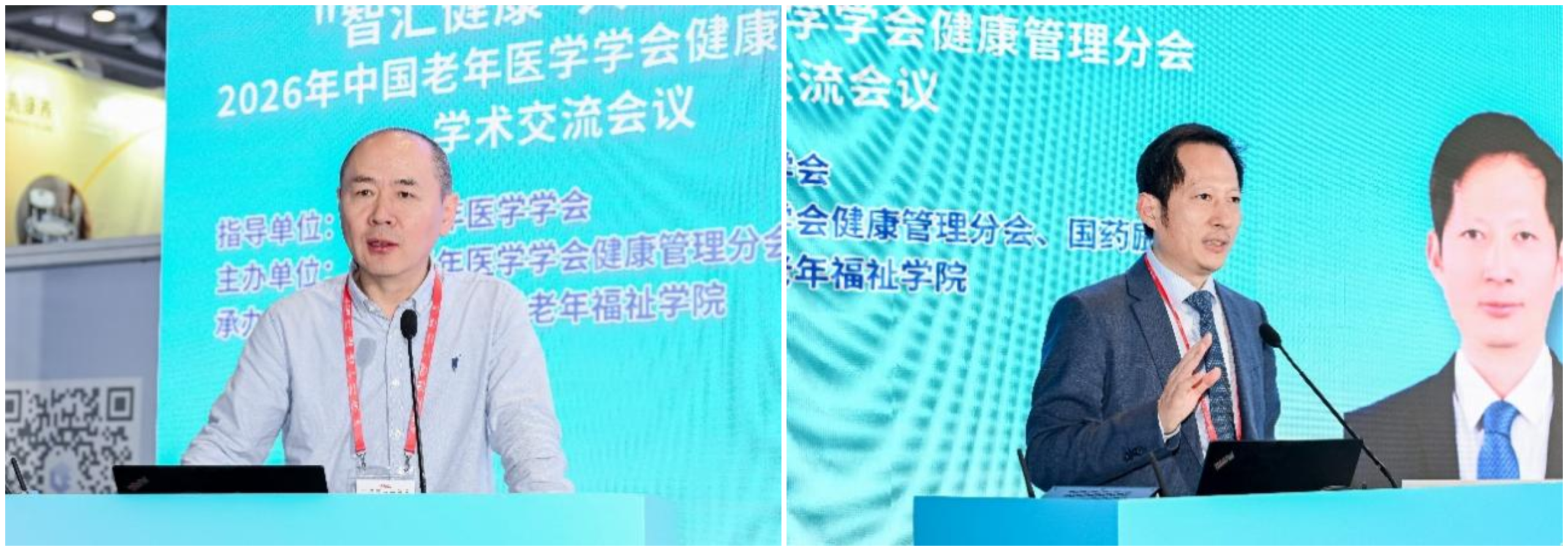
The opening ceremony of the conference was presided over by Sun Jinhai, deputy director of the Health Management Branch of the Chinese Society of Geriatrics and a professor at the Department of Health Management of Naval Medical University. Tu Qilei, the director of the Health Management Branch of the Chinese Geriatrics Society and the dean of the College of Geriatric Welfare at Civil Affairs Vocational University, extended a warm welcome to all the experts and colleagues present at the opening ceremony. He earnestly hoped that through this conference, the research progress and strategic application of geriatric health management could be exchanged and discussed, pooling wisdom, drawing on the strengths of others, and working together. We should effectively enhance the risk assessment and management capabilities for elderly health and accelerate the cultivation of compound health management professionals.
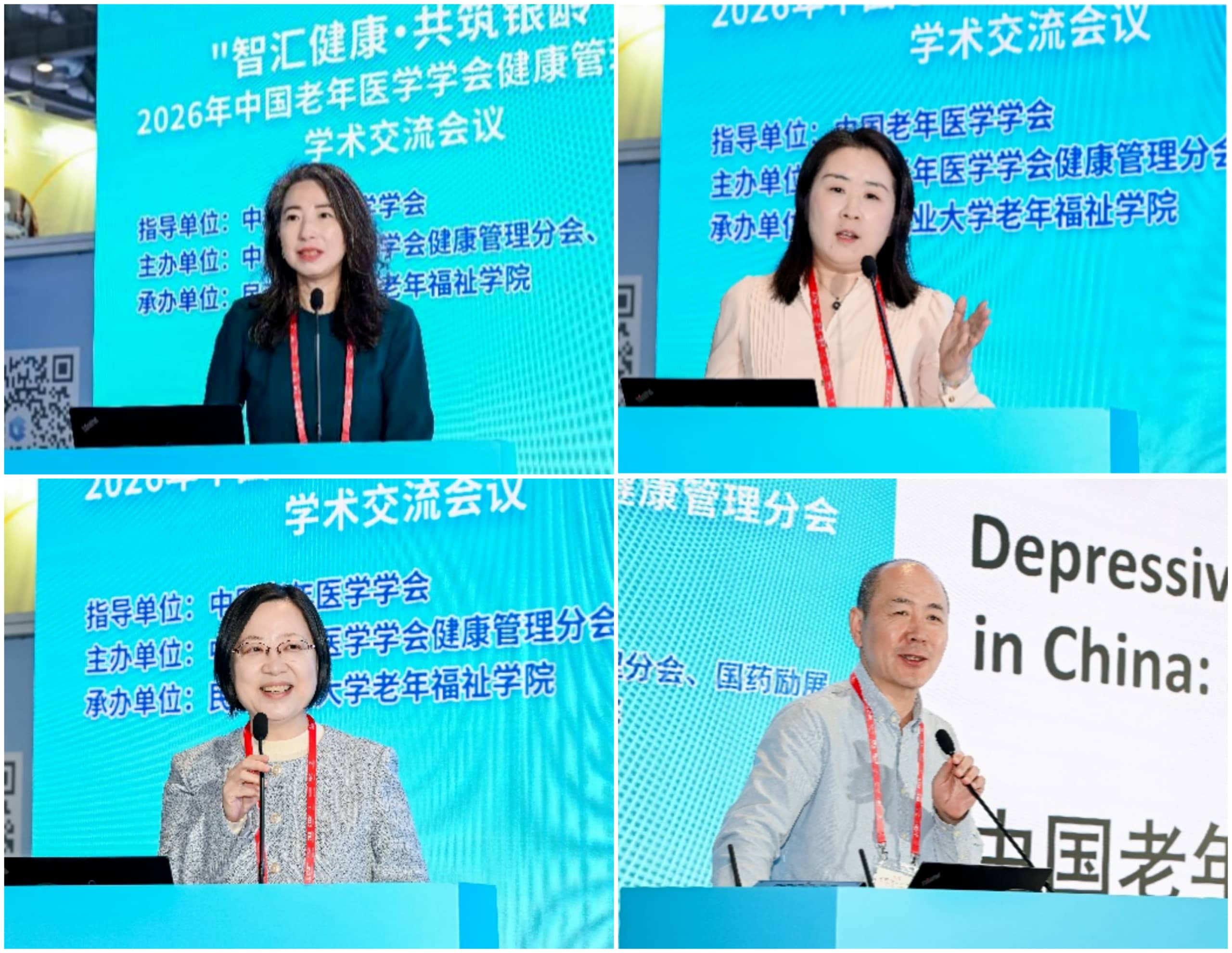
The conference experts delivered four keynote speeches: Sheng Ying, the executive director of the Institute of Integrated Development of Geriatric Health at Shanghai University School of Medicine, introduced the application of artificial intelligence in the health management of the elderly. Based on the current health status of the elderly and the background of multi-disciplinary and multi-dimensional management, digital means should be utilized to achieve scientific, hierarchical and personalized health management targeting the population and featuring dual-scenario interaction, so as to achieve the "three prevention" goals. Dr. Ye Chenjing, a member of the Health Management Branch of the Chinese Geriatrics Society and the director of Ruijin Hospital, Shanghai Jiao Tong University, took the successful treatment of elderly lymphoma patients with CART therapy as the starting point and introduced that through the full-process management of CAR-T cell therapy, combined with the multi-disciplinary collaboration and standardized monitoring of the International Medical Department of Ruijin Hospital, the full-process closed-loop management of elderly cancer patients can be achieved. Zheng Jiaoyang, a standing committee member of the Health Management Branch of the Chinese Geriatrics Society and director of the Health Management Center of the Second Affiliated Hospital of Naval Medical University, introduced and shared the bone health management of elderly men, emphasizing that due to the "two lows and two highs", elderly men should focus on the prevention and treatment of osteoporosis in men. It shared a comprehensive elderly bone health management plan covering the entire life cycle, including risk assessment and detection indicators. Professor Sun Jinhai, deputy director of the Health Management Branch of the Chinese Geriatrics Society and from the Department of Health Management at Naval Medical University, introduced the research and management of depressive symptoms in the elderly. Through the study of depressive symptoms in urban and rural elderly people over 80 years old, it was found that the detection rate in rural areas is higher than that in urban areas. He suggested strengthening health education, improving medical insurance and increasing financial investment. The meeting was respectively hosted and commented on by Liu Bin, the dean of Shanghai University School of Medicine, Li Jingya, the director of the Health Management Teaching and Research Section of Civil Affairs Vocational University, and Liu Lijuan, the director of the Health Management Teaching and Research Section of Naval Medical University.
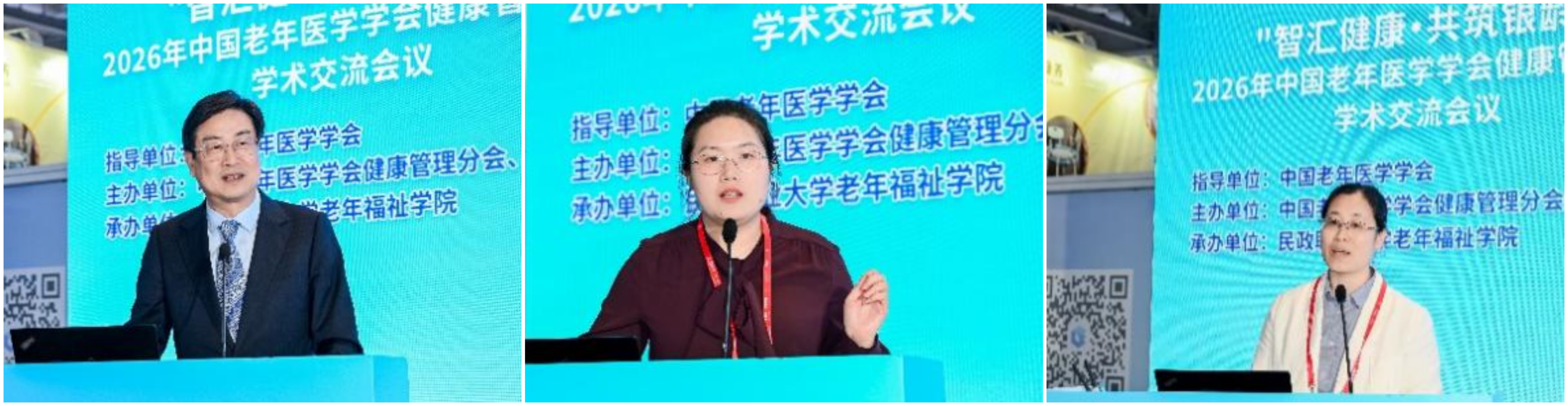
A total of over 100 people attended this academic conference. The speakers engaged in in-depth exchanges on cutting-edge topics such as artificial intelligence empowering elderly health, full-process management of elderly tumors, bone health of elderly men, and mental health of the elderly. The speeches were highly engaging, and all participants actively interacted. It has contributed to promoting the high-quality development of the elderly health cause and building a more harmonious aging society.