

Fu Xiaobing's Forty Years: Gradually healing the hardest wounds
Repost: Official wechat account of Nano Medical Rhythm
Fu Xiaobing's Forty Years: Gradually healing the hardest wounds
If the wounds could speak, they would probably all remember Fu Xiaobing.
This academician of the Chinese Academy of Engineering and a representative expert in the field of trauma and tissue repair and regenerative medicine has spent over four decades almost entirely on the same thing: focusing on those wounds that have not been cured for a long time and seeking ways to help them regrow healthy tissues.
In 2023, when Fu Xiaobing stood on the stage to receive the Wu Jieping Medical Award, he might recall that night on the front line in Laoshan, Yunnan in 1987. The looks of those young soldiers after they were injured by landmines and the moment when he felt powerless for the first time as a military doctor have always remained in his memory.
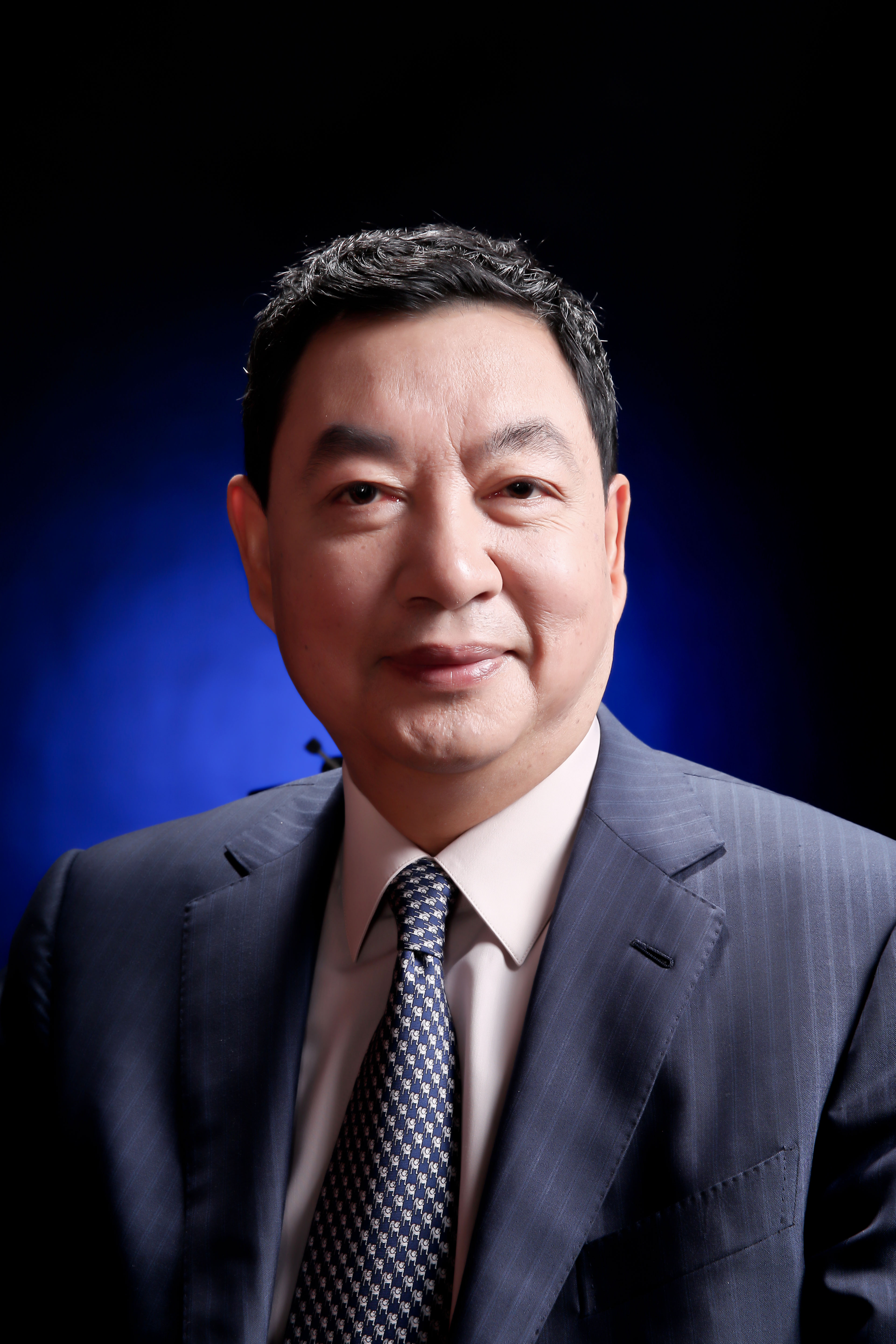
"Patients are my battlefield!" "
When Fu Xiaobing said this sentence, it didn't seem like a slogan; rather, it was more like a true footnote to his journey. He was born in Ziyang, Sichuan Province in 1960. After being admitted to the Third Military Medical University in 1978, he closely linked his career direction with the treatment of war wounds.
In the 1980s, the young Fu Xiaobing went to the frontlines in Yunnan and Guangxi four times. That's not a training ground, but a real battlefield. He witnessed with his own eyes many soldiers of his age having to have their lower limbs amputated due to landmine injuries. Some people woke up and burst into tears. It was also at those scenes that he understood a very simple truth: the mission of soldiers is to defend the country and the people, and the mission of military doctors is to do their utmost to keep and rescue these people who are defending the country and the people.
Later, he went to study at the Ramon Caja Medical Center of the University of Madrid in Spain. Before returning to China in 1993, he made a vow as an outstanding representative of overseas students: "After completing my studies abroad, I will return to China immediately to realize the 'Four Modernizations' and revitalize China." This sentence may sound quite old-fashioned today, but for that generation of young scholars, it was not a fine remark but a choice engraved in their hearts.
In 1995, Fu Xiaobing was awarded the National Science Fund for Distinguished Young Scholars, becoming one of the first scholars in the field of medical and health care in the entire military to receive this project. In the same year, he was awarded the First-Class Merit. At that time, he was 35 years old, in the prime of his life, full of vigor and enthusiasm. He once composed a poem, in which several lines read:
In the prime of his life, he was elected to the Chinese Academy of Engineering. What award will add more glory? Double happiness will fulfill everyone's wish. Fu Xiaobing knew in his heart that the truly tough battle had only just begun.
"Rejuvenation of old cells" : A discovery that was almost denied
In the autumn of 1999, on what seemed like an ordinary experimental day, Fu Xiaobing was observing the pathological specimen sections of human wounds after they had healed in the laboratory. Looking and looking, he stopped. During the process of wound healing, some already differentiated and mature skin cells unexpectedly underwent changes similar to "atavism", once again demonstrating the characteristics of skin stem cells.
Can old cells still become young? This is like an old man with white hair suddenly returning to his infancy. In the biological context of that time, this judgment sounded too bold and even somewhat inconceivable.
In 2001, Fu Xiaobing was the first to report this phenomenon in the international medical journal The Lancet. He proposed that under certain conditions, mature epidermal cells can transform into epidermal stem cells through the "dedifferentiation" pathway.
After the paper was published, doubts soon emerged. Some people say this is "pseudoscience", while others think it's completely impossible. At a defense meeting, even some experts put forward very sharp criticism on the spot.
Fu Xiaobing later recalled that Academician Wu Zuze of the Chinese Academy of Sciences had reminded him that this was an achievement that brought both honor and risk. In traditional understanding, cells move from birth to death, but when old skin cells revert to stem cells, it seems like "living towards death".
Facing the doubts, Fu Xiaobing did not rush to defend himself nor did he retreat. He, as if defending a position on the battlefield, gradually supplemented the evidence and published one paper after another, clarifying the logic behind his discoveries. In 2006, the discovery of induced pluripotent stem cells internationally provided strong evidence for his research. Those voices that once seemed "impossible" gradually quieted down.
Later, he wrote down such a realization:
Some accidental phenomena and casual discoveries may be the foundation of a major innovation. Never give up just because of carelessness. Whether you can seize such fleeting opportunities depends on whether you have made adequate preparations in advance, whether you have rich accumulation and correct judgment. At the same time, one should also be prepared to deal with all kinds of criticism.
A sword is sharpened over ten years; its frosty edge has never been tested. Today I show you, who has any injustice? From his accidental discovery in 1999 to winning the second prize of the National Science and Technology Progress Award in 2008, Fu Xiaobing took a full ten years.
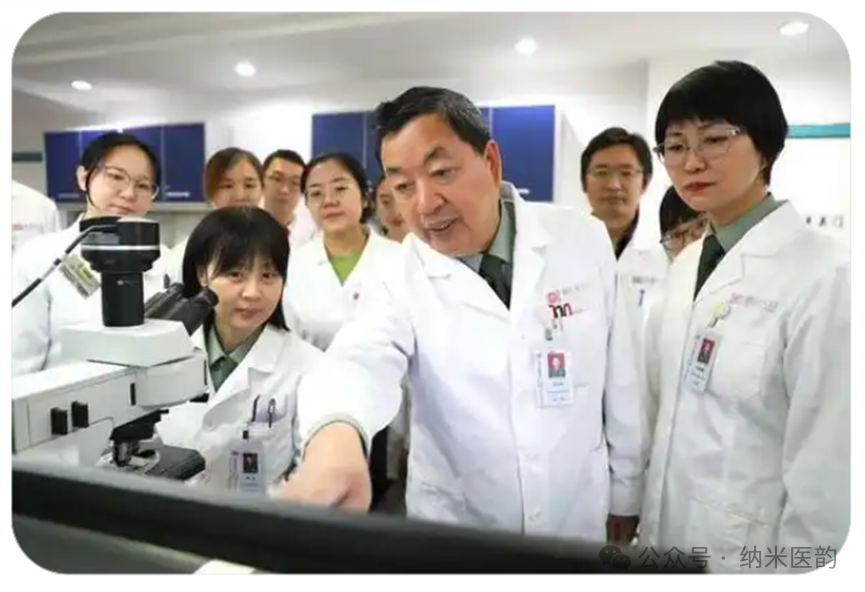
Sweat gland regeneration: Enabling burn patients to sweat again
For many burn patients, the most uncomfortable part is not just the pain before the wound heals. A longer period of pain often occurs after the wound has closed: the skin seems to have healed, but it can no longer sweat normally.
Sweat glands are small, but they are related to a person's body temperature regulation and also to the quality of life. If one cannot sweat, the skin will remain dry and rough for a long time, and the body's heat dissipation will also be affected. For patients, this is not the loss of a "minor function", but rather an incompleteness that they can feel every day.
In 2007, Fu Xiaobing led his team to further advance the original discovery of cell dedifferentiation towards clinical needs. By inducing differentiation, they transformed human mesenchymal stem cells into sweat glandular cells, achieving sweat gland regeneration for the first time in the world.
In 2009, Professor Hepard, the editor-in-chief of the International Journal of Trauma Repair and Regeneration, wrote a special commentary, calling this work a "landmark study".
A burn patient felt that his skin was significantly moist after receiving sweat gland regeneration treatment. Perhaps it's not just a few beads of sweat like those of a normal person, but for someone who once fell into despair, this little bit of "dampness" is already like the body rediscovering some long-lost response.
Fu Xiaobing often says that scientific research should not just remain at the level of papers; ultimately, it should return to patients and truly solve problems.
A 70-year ulcer, a 23-day turning point
In Tangxi Town, Jinhua, Zhejiang Province, there is an 89-year-old Mr. Fu. There is a wound on his left lower leg that has been repeatedly ulcerated for over 70 years. The wound was black and stinky. The old man sat in front of the medical staff of Fu Xiaobing's team, feeling both expectant and hesitant to hold out too much hope. He asked, "My ulcer has been there for over 70 years. Can you cure it for me?"
Fu Xiaobing smelled the pungent stench and looked at the old man, nodding solemnly, "Let's give it a try."
Twenty-three days later, a turning point emerged. The wound that had troubled Grandpa Fu for most of his life has healed. The old man touched his healed calf and smiled like a child.
Similar stories are not uncommon in Fu Xiaobing's medical career. There was a patient with diabetic foot who, according to traditional treatment methods, could only have amputation to save his life. At one point, he was so desperate that he said, "Put socks on me and let me die with dignity." Later, after 52 days of treatment with the stem cell regeneration technology provided by Fu Xiaobing's team, the wound on the foot basically healed.
"Though my wish has been fulfilled, it's a new beginning. In this year of my destiny, I start anew and aim even higher." " The lines of poetry written by Fu Xiaobing in "Bosuanzi: Double Happiness" are particularly apt when viewed in his medical career.
"Looking East" : China's solutions are seen by the world
In 2015, Fu Xiaobing, as the first contributor, completed the research project "Innovative Theories and Key Measures for the Occurrence and Prevention of Difficult-to-Heal Wounds on the Chinese Human Body Surface", which won the first prize of the National Science and Technology Progress Award. This achievement has raised the wound cure rate of typical units in our country from about 60% in the past to around 94%.
This change has led international peers to also start to re-understand China's wound repair research. Professor Manny from the University of Southampton in the UK once lamented, "For the treatment of chronic and non-healing wounds, we should look eastward, to the team led by Fu Xiaobing!"
In 2018, Fu Xiaobing was elected as a foreign academician of the French Academy of Medical Sciences. In 2021, he was elected as a foreign member of the National Academy of Engineering of the United States, becoming a medical expert with the titles of academician in China, the United States and France simultaneously.
But for the petty soldiers, the title is merely the outcome. What truly underpinned these results were countless unseen days and nights, the persistence after being questioned time and again, and the irreplaceable relief when seeing the patients' wounds heal.
In a speech, he said that personal interests should be combined with the needs of the country. Once the direction is chosen, one should move forward steadily and not be eager for quick success and instant benefits.
Facing death to live is also a lesson he left to the young people
Fu Xiaobing has always been fond of the word that Academician Wu Zuze used to evaluate his research back then: "To live towards death."
These four words not only reveal the life logic behind cell differentiation but also seem to summarize the path that Fu Xiaobing himself has taken.
The process from birth to death of cells is a natural law. However, when old cells regain the characteristics of stem cells under certain conditions, it is as if a crack has been opened in the rules. Human life will also age and diseases will cause damage, but Fu Xiaobing firmly believes that new tissues may grow in wounds and dry skin may regain sweat glands.
In "Fragmented Memories and Reflections", he wrote:
"At the age of one's destiny, start anew and aim even higher." "
There is a very clear attitude in this sentence: Don't be afraid of questioning, don't be afraid of failure, and don't be afraid of starting all over again.
He also often tells young scholars that they should first have a firm belief that they can make truly creative contributions. You should also act immediately and not just stay in your mind. It is even more important to retain a bit of unconventional thinking and not to back down easily when facing doubts.
When he spoke of this, it seemed as if he had returned to many crucial moments: the young student who made the vow to "revitalize China" in Spain, the military doctor who was rescuing the wounded on the front line of Laoshan, and the middle-aged scholar who was lost in thought for a long time staring at the pathological sections in the laboratory. It is those scenes put together that have created the Fu Xiaobing that people see today.