
The 2026 Academic Conference on Basic and Translational Innovation of Aging Science and Geriatrics and the Re-election Conference of the Basic and Translational Medicine Branch of the Chinese Geriatrics Society were successfully held in Hangzhou
On June 27, 2026, the 2026 Academic Conference on Basic and Translational Innovation of Aging Science and Geriatrics and the Re-election Conference of the Basic and Translational Medicine Branch of the Chinese Geriatrics Society were held in Hangzhou. This conference is hosted by the Basic and Translational Medicine Branch of the Chinese Geriatrics Society, and supported by Beijing Hospital (National Center for Geriatrics), the Key Laboratory of Geriatrics of the National Health Commission, the Basic Research Group of the Geriatrics Branch of the Chinese Medical Association, the Hangzhou Anti-Aging Research Institute, the Aging Research Institute of Hangzhou Normal University, the Zhejiang Biophysical Society, and the Zhejiang Provincial Hospital of Traditional Chinese Medicine.
The leadership transition conference: Passing on the Torch and consolidating the organizational foundation
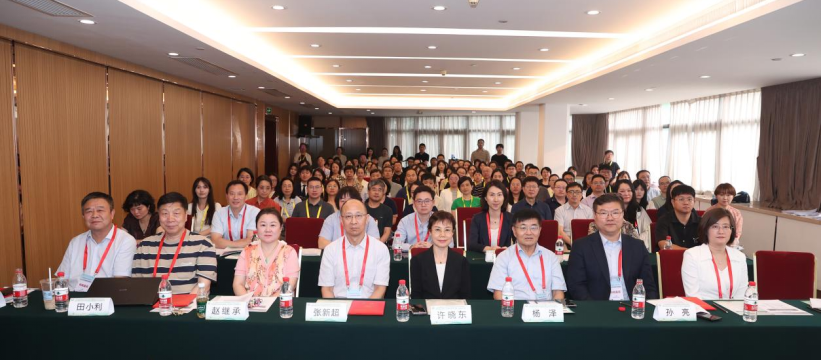
The Basic and Translational Medicine Branch of the Chinese Geriatrics Society was established in 2015. Under the successive leadership of Professor Yang Ze, the founding chairperson, and Professor Zhang Xinchao, the second-term chairperson, it has always been at the forefront of basic research and clinical transformation in geriatrics, continuously promoting academic exchanges and cooperation in the fields of aging biology and geriatric basic medicine. Facing the new situation of accelerating population aging, the branch has been continuously deepening the integrated development path of "basic, clinical and translational" in a trinity.
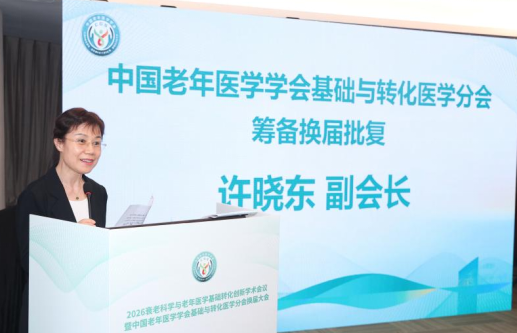
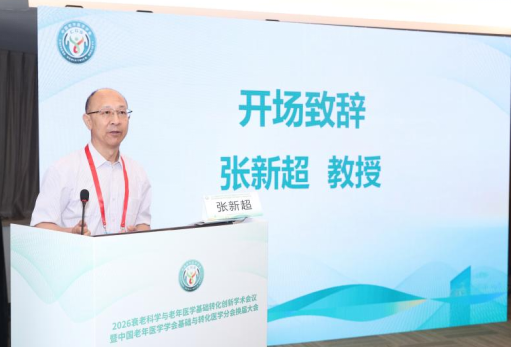
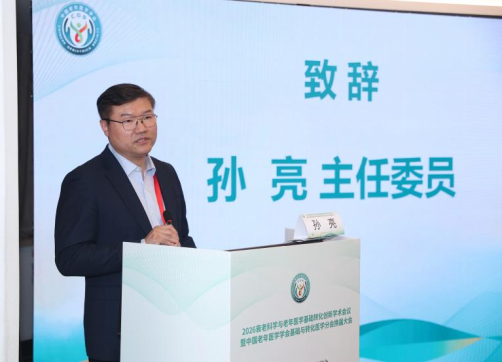
The re-election conference kicked off with the opening remarks by Professor Zhang Xinchao, the second chairperson of the branch and from Beijing Hospital (National Center for Geriatrics), who systematically summarized the past work of the branch. Subsequently, Xu Xiaodong, vice president and Party branch secretary of the Chinese Society of Geriatrics, read out the approval for the change of term, fully affirming the achievements of the second committee's work. Professor Sun Liang from Beijing Hospital (National Center for Geriatrics) made a special report on the preparations for the change of term and the structure of the new committee.
The election for the new term was presided over by Zhao Jicheng, the deputy secretary-general of the Chinese Society of Geriatrics. After democratic election, the leadership team of the third committee of the Basic and Translational Medicine Branch of the Chinese Geriatrics Society was officially elected: Professor Sun Liang (National Center for Geriatrics) was elected as the chairperson, and Professors Tian Xiaoli, Liu Baohua, Cao Liu, Gu Zhifeng, Zhang Zhentao, Sun Yang, Bu Xianle and Yuan Huiping were elected as vice-chairpersons. The branch has appointed Professor Zhang Xinchao as the honorary chairperson and Professors Liu Guanghui, Li Jian, Liu Junping, Shen Yong, Huo Zhenghao and He Xiaohua as advisors. Professor Yang Ruiyue serves as the director-general, while Professors Xiang Yang, Zou Lihui and Dong Chen are appointed as deputy Director-General. The office of the branch is located at Beijing Hospital (National Center for Geriatrics).
Immediately after the re-election meeting, the new committee held its first plenary session, where it reviewed and approved the work plan for this term and arranged the key tasks for the year. It also conducted in-depth discussions on core topics such as organizational construction, academic guidance, and technology transfer, laying a solid foundation for the high-quality development of the third committee.
Academic Conference: Focusing on three major sections and anchoring key areas of aging research
The 2026 Academic Conference on Basic Translational Innovation of Aging Science and Geriatrics, with the theme of "Focusing on the Health Needs of the Elderly and Empowering the Practical Transformation of Aging Research", will focus on key directions such as decoding the mechanisms of aging, breaking through the bottlenecks in the prevention and treatment of chronic diseases, and promoting the clinical transformation of biomarkers and targeted interventions. Three special topics will be set up: "Digital Intelligent Screening Facilitating the Transformation of the Elderly Health Prevention and Control System", "New Progress in Aging Mechanism and Basic Research of Geriatrics", and "Transformation and Practical Innovation of Health and Longevity Intervention".
Special Topic One: Digital Smart Screening Facilitates the Transformation of the Elderly Health Prevention and Control System. Professor Yang Ze from Beijing Hospital (National Center for Geriatrics) systematically expounded on the biological basis of healthy longevity and the latest progress in longevity medicine, and proposed intervention strategies and clinical pathways to promote healthy aging. Professor Sun Liang from Beijing Hospital (National Center for Geriatrics) focused on the deep integration of biotechnology and information technology, introducing the construction of the multi-dimensional digital ICOPE elderly health demonstration Zone and its promoting effect on the smart health care model. Professor Sun Yang from the First Affiliated Hospital of Air Force Medical University analyzed the innovative application of artificial intelligence technology in the multimodal assessment of cardiovascular diseases in the elderly, providing technical support for the precise identification and intelligent early warning of cardiovascular risks. Professor Dong Birong from West China Hospital of Sichuan University, starting from the transformation path from omics data to life phenotypes, expounded on the biological foundation provided by basic research for digital aging assessment. Professor Li Yanming from Beijing Hospital (National Center for Geriatrics) presented the epidemiological characteristics and comprehensive intervention strategies of comorbidities in the elderly. Professor Liu Zuyun from Zhejiang University introduced the progress of the Rugao Longevity Cohort construction and its unique value in the analysis of aging mechanisms and the research on health protection factors for the long-lived population.
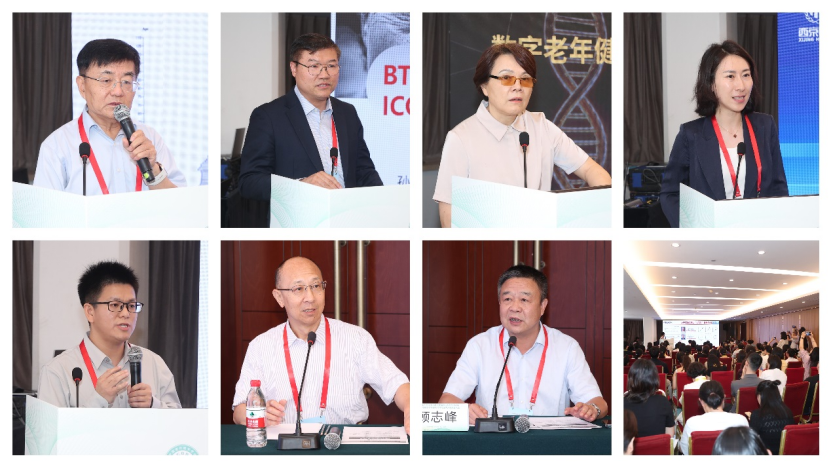
Special Topic Two: New Advances in Aging Mechanisms and Basic Research in Geriatrics. Professor Liu Baohua from Shenzhen University proposed the "Central Law of Aging", elaborating on the core regulatory mechanisms of aging and the manifestation patterns and intervention targets at the cellular and tissue levels. Professor Bu Xianle from Army Medical University focuses on the latest discoveries in the peripheral pathological mechanisms of Alzheimer's disease and their implications for early diagnosis and intervention strategies. Professor Ni Ting from Fudan University analyzed the transcriptome characteristics and recognition methods of cellular senescence, providing molecular markers for the precise detection and targeted clearance of senescent cells. Professor Wang Hu from Hangzhou Normal University introduced the key role and regeneration and repair mechanism of DNA damage in hematopoiesis and cardiovascular aging.
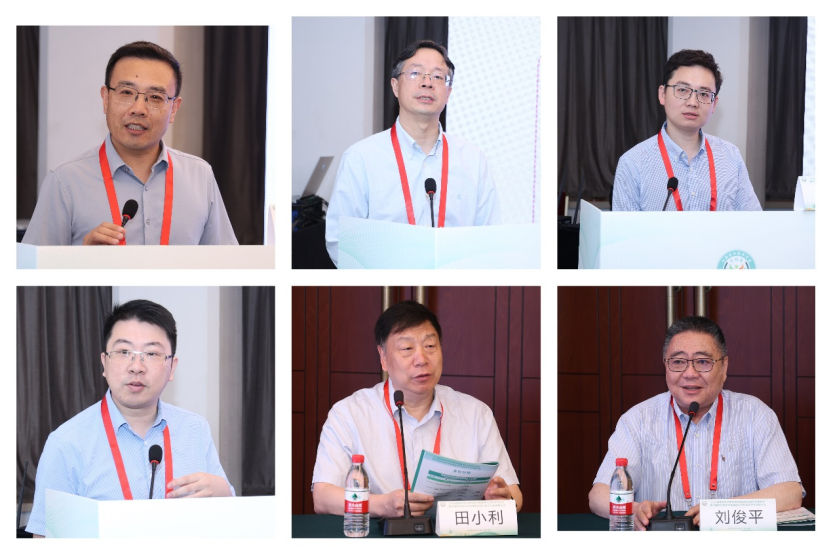
Special Topic Three: Transformation and Practical Innovation of Health and Longevity Interventions. Professor Xiang Yang from Nanchang University demonstrated the mechanism by which interorgan interactions regulate skeletal muscle aging and targeted intervention strategies, providing new targets for the prevention and treatment of sarcopenia. Professor Nie Chao from BGI Research Institute in Shenzhen expounded on the technical path of health quantification and the enhancing role of multimodal data fusion in smart health management. Professor Zhou Xianbo, the CEO of Asnolai (Shanghai) Pharmaceutical Technology Co., LTD., discussed the clinical transformation prospects of digital technology in the early screening, diagnosis and full-course management of Alzheimer's disease. Professor Xu Meihong from Peking University presented the molecular mechanism by which exogenous nucleotides delay aging, the evidence from randomized controlled trials, and the scientific path for their transformation into nutritional intervention products. Professor Ma Hongming from Dongzhimen Hospital of Beijing University of Chinese Medicine introduced the evidence-based medical evidence of Sanqi preparations in the prevention and treatment of stroke and the clinical rational drug use strategies based on the consensus of guidelines. The experts attending the meeting engaged in in-depth discussions, fully demonstrating the latest achievements of China's aging science and geriatric medicine from basic research to clinical transformation, and opening up a favorable situation for the new term's work of the branch.
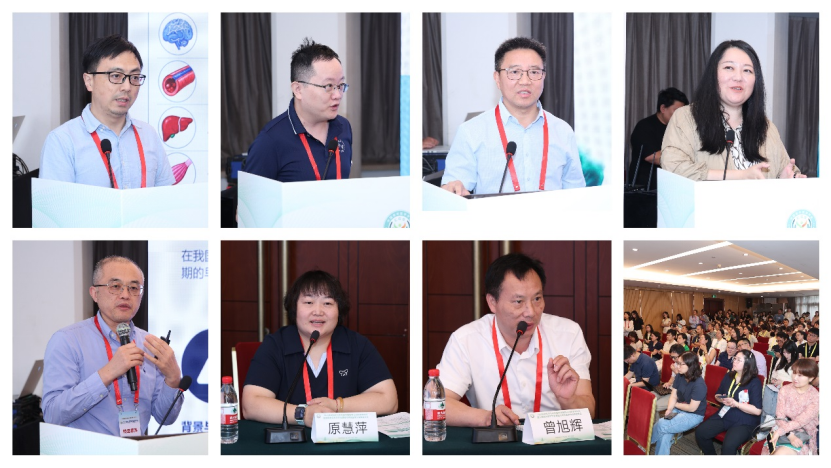
The conference reports were respectively presided over by Zhang Xinchao, the honorary chairperson of the branch, Liu Junping, the advisor, Gu Zhifeng, Tian Xiaoli, Yuan Huiping, the vice-chairpersons, and Zeng Xuhui, the standing committee member.
The successful convening of this conference marks the official start of a new journey for the third committee of the Basic and Translational Medicine Branch of the Chinese Geriatrics Society. The branch will continue to focus on the goal of achieving self-reliance and self-strengthening in science and technology in the field of elderly health, firmly establish the correct view of political achievements centered on people's health, and integrate "doing practical things for the people" into the entire chain of scientific research and transformation. In the future, the branch will proactively lay out the analysis of aging mechanisms, intelligent early warning intervention and active health technologies, integrate basic research, technological breakthroughs, industrial transformation and policy innovation, and build an open and collaborative innovation ecosystem. By building a high-end think tank and transformation service platform with the characteristics of the society, we will take the initiative to assume responsibilities in the national science and technology innovation system, and strive to produce more landmark achievements that are "practical, effective and accessible to all", injecting strong technological impetus into addressing population aging and improving the quality of life of hundreds of millions of elderly people.