
The 2026 Academic Conference on Smart Medical Technology and Management of the Chinese Society of Geriatrics was grandly held in Liuyang
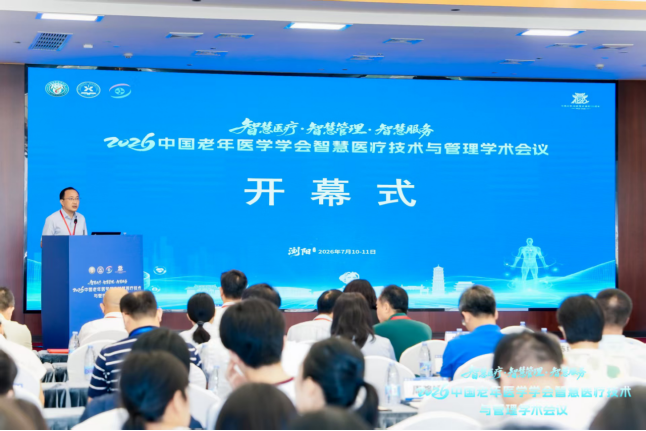
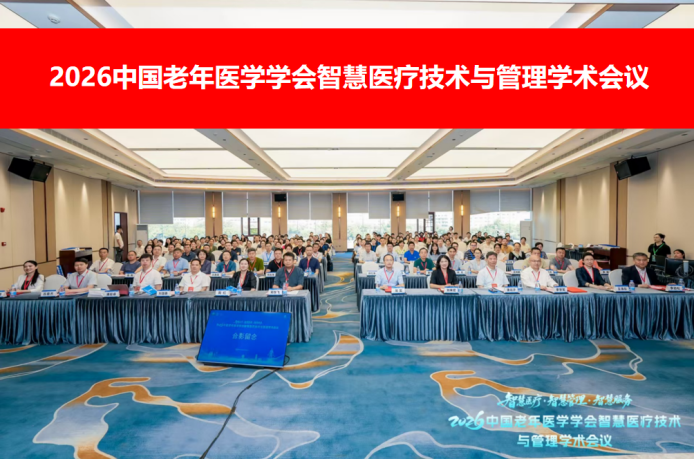
On July 11, 2026, the 2026 Academic Conference on Smart Medical Technology and Management of the Chinese Society of Geriatrics was grandly opened in Liuyang, Hunan Province. This conference is hosted by the Smart Healthcare Technology and Management Branch of the Chinese Geriatrics Society, with the theme of "Smart Healthcare, Smart Management, and Smart Services". It aims to promote the in-depth integration of smart healthcare technology research and development with the refined management of medical institutions, and drive the high-quality development of the elderly health cause. Chang Shi, Deputy Director of the Health Commission of Hunan Province, Tao Hong, Vice Chairperson of the Changsha Association for Science and Technology, Liu Laihong, Vice Mayor of Liuyang Municipal People's Government, Deng Dongfei, Deputy Secretary-General of the Chinese Society of Geriatrics, and Professor Tang Beisha, Founding Chairperson of the Smart Healthcare Technology and Management Branch of the Chinese Society of Geriatrics and a professor in the Department of Neurology at Xiangya Hospital, Central South University Professor Li Xuejun, the chairperson of the second committee of the branch and the vice dean of Xiangya School of Medicine, Central South University, along with other leaders and experts, attended the opening ceremony. The opening ceremony was presided over by Professor Li Jinsong, the deputy director of the Smart Medical Technology and Management Branch of the Chinese Geriatrics Society and the executive deputy director of the Ministry of Education Engineering Research Center for Electronic Medical Records and Intelligent Expert Systems at Zhejiang University. Zhao Liming, the director of Liuyang Jili Hospital, delivered a welcoming speech. He extended a warm welcome and sincere gratitude to the attending leaders and experts. He stated that as a member unit of the branch and the organizer of this conference, Jili Hospital has long been exploring the integration path of smart healthcare at the grassroots level and elderly health. It is expected that through this conference, relying on the platform of the society, it can deepen cooperation with medical institutions in the Hunan-Jiangxi border area, effectively enhance the regional smart service capacity for the elderly, and enable more grassroots people to benefit from cutting-edge technologies.
Keynote Forum: Deep Integration of Cutting-edge Technologies, Intelligently Painting a New Picture of Elderly Health
At the keynote forum session, many renowned domestic experts and scholars delivered special reports on the cross-integration and cooperation between the cutting-edge technologies of smart healthcare and geriatrics. Professor Chang Shi, the deputy director of the Health Commission of Hunan Province, took the AI-assisted diagnosis of thyroid diseases as an example to systematically explain the application effect of the auxiliary diagnosis robot based on holographic ultrasound spectra in the early screening at the grassroots level, and deeply interpreted the national policy measures on empowering grassroots diagnosis and treatment with artificial intelligence. Professor Li Jinsong, the deputy director of the branch and from Zhejiang University, delivered a report titled "Clinical Data Governance and Cross-institutional Collaborative Utilization", sharing his research achievements in the field of multi-center clinical data collaborative utilization, and providing a Chinese solution to the problems of "inability to use, fear of using, and inability to use" of cross-institutional clinical data. Professor Pan Tingrui from the Shenzhen International Graduate School of Tsinghua University introduced the "Electric Human-Machine Interface" technology, which achieves fully flexible, highly transparent and low-cost sensing characteristics, providing a brand-new technical means for elderly health monitoring and personalized medical care. Professor Yu Siwei from Guizhou Medical University focused on the data security and ethical compliance issues of medical artificial intelligence, emphasizing the importance of establishing and improving the data governance system and ethical review mechanism. Professor Li Xuejun, the chairperson of the branch and the vice dean of Xiangya School of Medicine at Central South University, presented the broad prospects of big data and artificial intelligence technologies in the precise diagnosis and individualized treatment of neuro-oncology, focusing on data-driven neuro-oncology translational research.
Special Report: Interdisciplinary Integration and Grassroots Innovation Practice
This conference also brought together diverse perspectives from the front lines of clinical practice, engineering technology, and hospital management. Professor Luo Jingjing from the School of Electronic Information of Central South University introduced the brain-computer interface AI method for motor function reconstruction, providing a new technical path for neurorehabilitation. The team led by Chief Nurse Li Li from Xiangya Hospital of Central South University reported the research results on the construction and classification of a quantitative assessment system for the demand of elderly medical and elderly care services, providing a quantitative basis for the scientific allocation of long-term care resources. Deng Liang from Liuyang Jili Hospital shared the application practice of the 5G mobile stroke treatment model empowered by information at the grassroots level. By achieving pre-hospital thrombolysis through "boarding the vehicle and entering the hospital immediately", the median DNT was significantly reduced, providing a replicable "Liuyang model" for the construction of the national grassroots stroke treatment system. Furthermore, Professor Peng Shaoliang from the National Supercomputing Center in Changsha, Professor He Zhihai from Southern University of Science and Technology, Professor Huang Wenxiang from the First Affiliated Hospital of Chongqing Medical University, Professor Lu Xuechun from the General Hospital of the People's Liberation Army of China, Professor Liu Yongguo from University of Electronic Science and Technology of China, Professor Sun Chunguang from the Affiliated Rehabilitation Hospital of the National Assistive Devices Research Center, and Professor Peng Hua from Xiangya Hospital of Central South University, among other experts, also respectively presented on multimodal AI large models and home Outstanding reports were delivered on cutting-edge topics such as medical and health care intelligent agents, elderly body temperature monitoring, logomics individualized treatment, artificial intelligence sarcopenia diagnosis and treatment decision-making, hospital digital transformation, and intelligent management of no-companion care, fully demonstrating the favorable situation of multi-disciplinary integration and collaborative innovation among industry, academia, research, and medical institutions.
Training Session: Combining theory with practical operation to enhance grassroots service capabilities
On the afternoon of July 10th, the conference held a special session on "Enhancing the Capacity of Smart Elderly Health Services at the Grassroots Level" at Jili Hospital in Liuyang City. The training focused on six major themes: assessment and management of common emergencies among the elderly, development and clinical practice of an AI platform for rational drug use, precise control of stroke prevention, informatization construction of comprehensive geriatric assessment technology, symptom management from the perspective of general practice, and post-stroke rehabilitation. Experts such as Wang Aimin, Tang Mimi, Bu Guiwen, Peng Linlin, Long Yanfang, and Liu Qiong were specially invited to give special lectures. And organize the trainees to visit the hospital in person. The training content is closely related to the actual needs of the grassroots level, effectively enhancing the clinical practical operation ability and information service literacy of grassroots medical staff. A large number of grassroots medical workers from the border areas of Hunan and Jiangxi provinces actively participated in the training, and the on-site learning atmosphere was very strong.
As a national academic conference is held in a grassroots hospital, it fully demonstrates the practical orientation of the society to center on people's health and establish and practice the correct view of political achievements. It is a concrete practice of promoting the downward flow of high-quality academic resources and doing practical things and solving problems for the grassroots people. This conference holds positive and far-reaching significance for promoting the coordinated development of elderly medical services in the Xiang-Gan border region and enhancing the practical capabilities of smart healthcare at the grassroots level. It has also injected new impetus into the national elderly health cause and contributed to the construction of a Healthy China with concrete actions.
Prev
The third committee election conference of the Medical Care Branch of the Chinese Geriatrics Society was successfully held
Next
【 Meeting Notice 】 Multidisciplinary Discussion Meeting on the Diagnosis and Treatment of Difficult Cases of Interstitial Lung Disease Standardization Capacity Enhancement Project