
The national continuing medical education project "Medical and Elderly Care Integration Care Management Professional Training Class" concluded successfully in Hefei in 2026
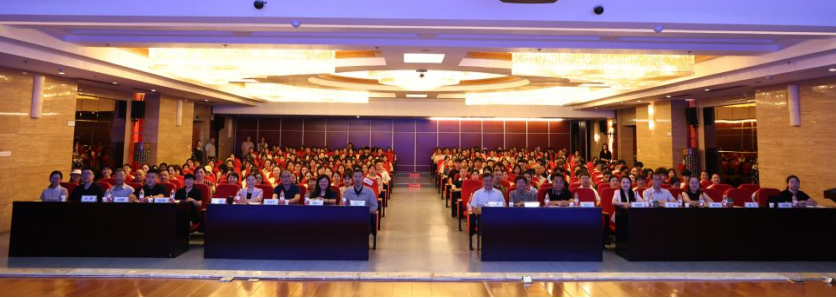
From July 10th to 12th, 2026, the National continuing Medical Education project "Medical and Elderly Care Integration Management Professional Training Course" (Project Number: 2026-03-10-406 (National)), hosted by the Medical and Elderly Care Integration Promotion Committee of the Chinese Geriatrics Society and organized by the First People's Hospital of Hefei, was successfully held in Hefei, Anhui Province. Nearly a hundred trainees from medical and elderly care integration institutions, medical institutions, elderly care service institutions and administrative management departments across the country participated in this training.
Respond to the propositions of The Times and consolidate the bottom line of people's livelihood
At present, the aging process of the population in our country is accelerating, and the demand of the elderly for high-quality medical and elderly care services is increasing day by day, providing a broad space for the development of the integration of medical care and elderly care. In recent years, under the guidance of the "Healthy China" strategy, the medical and elderly care integration service system has been continuously improved. However, in the face of the increasingly diverse elderly care demands of the people, there is an urgent need to cultivate a professional care management team that understands policies, is proficient in skills, good at management, and has a sense of mission. This training course was born in response to the trend, with the goal of "cultivating a management professional, leading a team well, and serving the elderly in a certain area". It adheres to the course design orientation of systematization, standardization and practicality, focusing on helping front-line backbone personnel enhance three core capabilities: comprehensive assessment, service organization and quality control, and promoting the advancement of grassroots medical and elderly care services towards a more professional, standardized and smooth direction.
Build consensus and clarify the direction
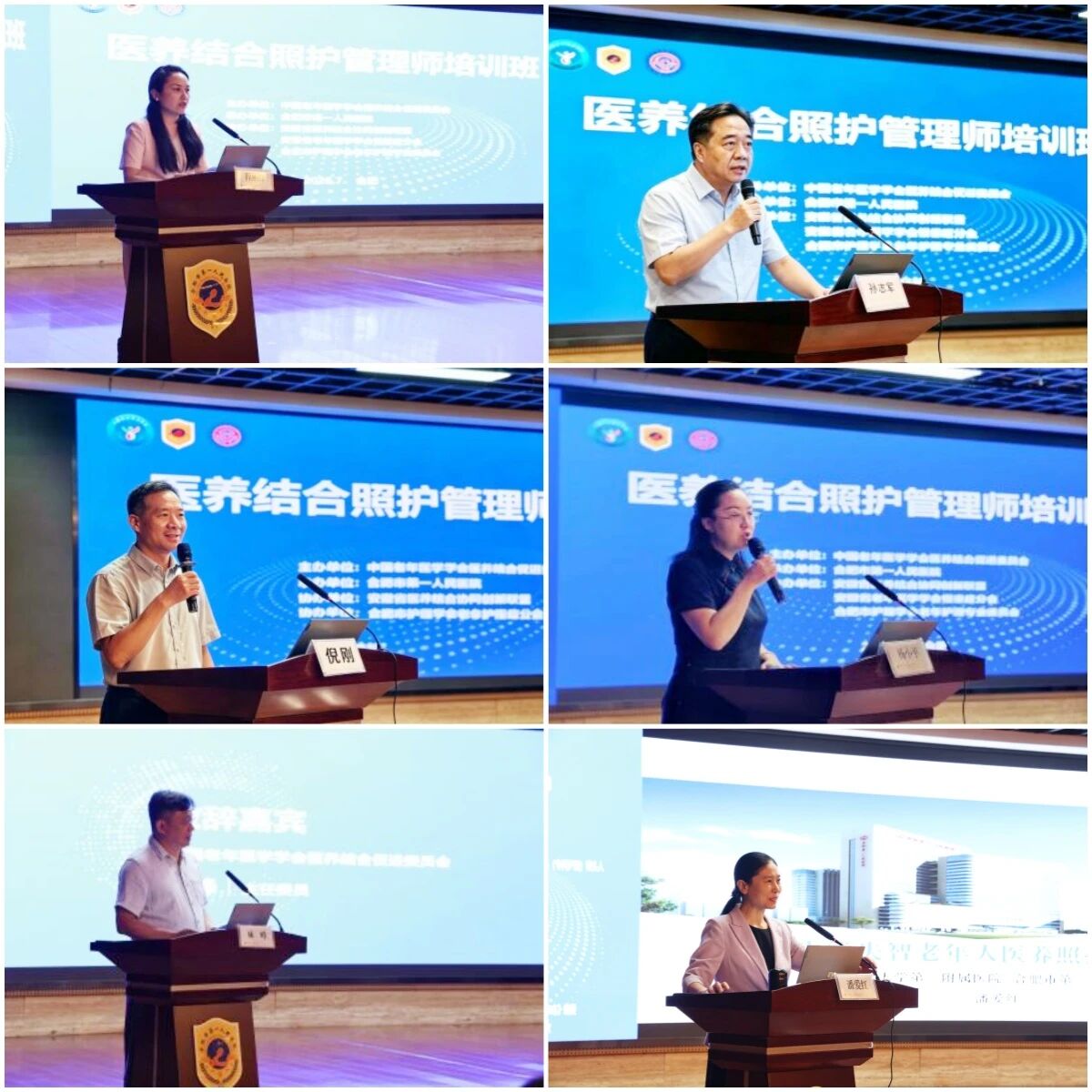
The meeting was co-chaired by Sun Zhijun, the president-elect of the Medical and Elderly Care Integration Promotion Committee of the Chinese Geriatrics Society, Cheng Lihong, the vice chairperson and general director, Ni Gang, the director of the Geriatrics Department of the First People's Hospital of Hefei, and Yang Xiaoping, the deputy general director of the Medical and Elderly Care Integration Promotion Committee. Comrade Zhao Yongfeng, Deputy Secretary-General and Director of the Office of the Chinese Society of Geriatrics, Comrade Han Songhua, Director of the Academic Training Department of the Chinese Society of Geriatrics, and the expert lecturers attended the opening ceremony.
Lin Feng, the director of the Medical and Elderly Care Integration Promotion Committee of the Chinese Geriatrics Society and the director of the Department of Orthopedics at the Hainan Hospital of the PLA General Hospital, pointed out in his opening speech that medical and elderly care integration management professionals are not only the transmitters of skills but also the executors of service standards and the guardians of service quality. It is hoped that all trainees will take this training as an opportunity to enhance their professional qualities, cultivate a deep sense of serving the elderly, and truly transform the knowledge they have learned into practical abilities to serve the elderly.
Pan Aihong, the vice president of Hefei First People's Hospital, said in her speech that as the organizing unit and a national typical experience unit of medical and elderly care integration, the hospital has always regarded medical and elderly care integration services as an important means to fulfill social responsibilities and respond to public concerns. It has always kept the health needs of the elderly in mind and the quality of care in hand, and has practiced the solemn commitment of "doing practical things for the people" with concrete actions.
Closely aligning with practical demands, multi-dimensional courses and on-site observations are integrated and mutually reinforcing
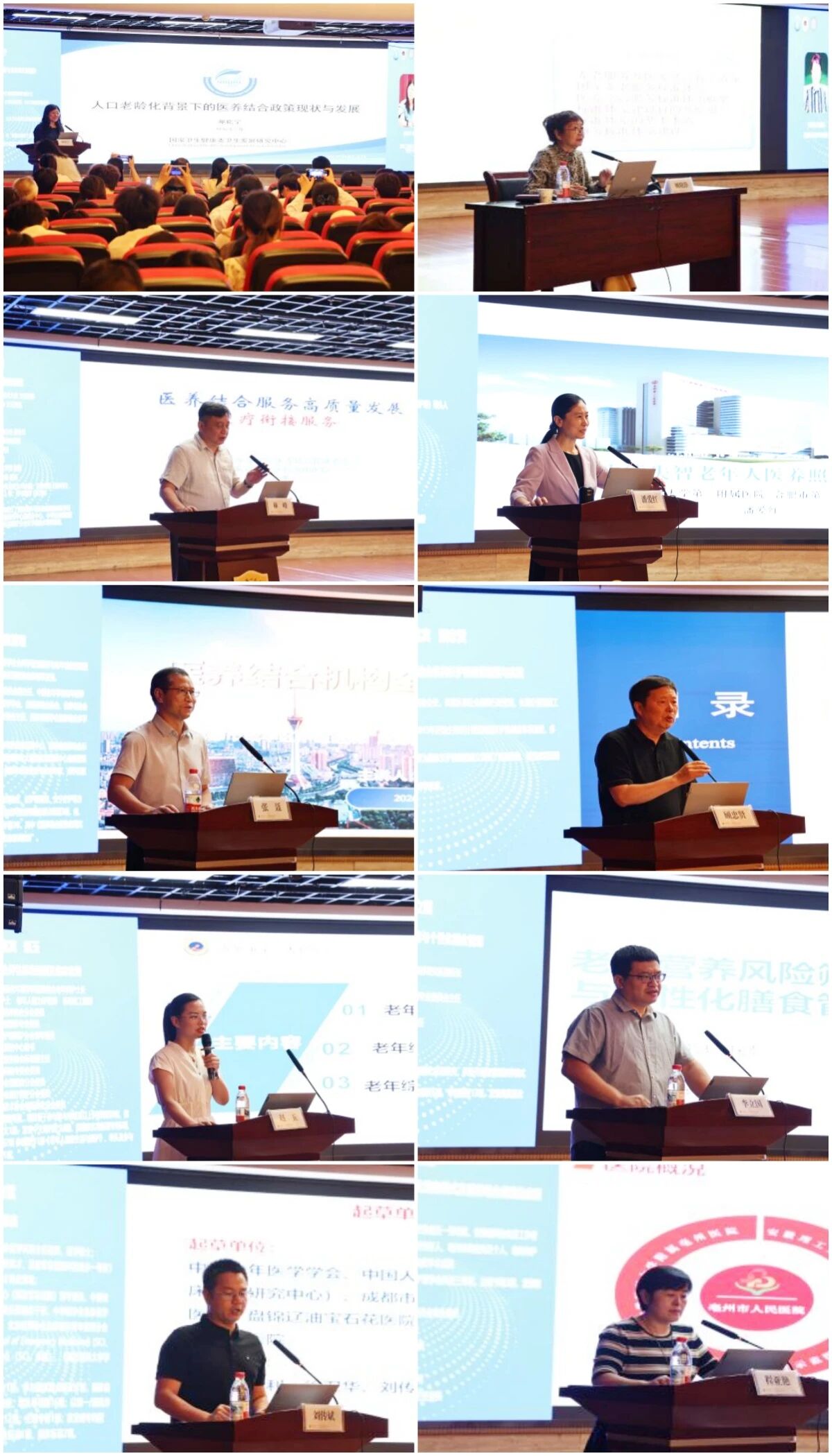
The two-day training course was tight and substantial, inviting over ten renowned experts and scholars in the field of medical and elderly care integration in China to give special lectures. The course content is closely related to practice, covering multiple dimensions such as policy interpretation, standard system construction, clinical care practice, and quality control of medical and elderly care integration.
Hao Xiaoning, a researcher at the Health Development Research Center of the National Health Commission, shared "The Current Situation and Future Development Trends of Medical and Elderly Care Integration Policies". Yao Xiaojing, a researcher from the National Standard Technical Review Department, gave a keynote lecture on "The Construction of the Standard System for Integrated Medical and Elderly Care Services". Lin Feng, the director of the Medical and Elderly Care Integration Promotion Committee of the China Geriatrics Society, introduced the "Service Standards for Medical Connection in Medical and Elderly Care Integration Institutions". Pan Aihong, the vice president of Hefei First People's Hospital, based on her first-hand experience, gave an in-depth lecture on "Medical and Elderly Care Practice for Disabled and Dementia-Impaired Elderly People" and "Current Situation and Indicators of Medical and Elderly Care Integration Quality in Anhui Province", providing a clear framework for improving the quality of the institution. Zhang Nie, deputy director of the Medical and Elderly Care Integration Promotion Committee of the China Geriatrics Society, shared "Full-process Standardized Management of Medical and Elderly Care Integration Institutions", systematically sorting out the key nodes and standardized paths in the operation of institutions. Gu Zhongxian, the president of Nantong Medical Insurance Research Association, shared "Policy Connection and Practice of Long-Term Care Insurance for Medical and Elderly Care Integrated Institutions", and Zhao Yu, the head nurse of the Geriatric Department of the First People's Hospital of Hefei, gave a lecture on "Standardized Process of Comprehensive Geriatric Assessment (CGA)", emphasizing the importance of assessment as the basis for care decision-making. Li Liguo, deputy director of the Institute of Rehabilitation Medicine and Health Care of Henan Academy of Medical Sciences, introduced "Elderly Nutritional Risk Screening and Personalized Dietary Management". Liu Chuanbin, deputy chief physician of the Emergency Medicine Department of the First Medical Center of the PLA General Hospital, shared the "Service Standards for Integrated Medical and Elderly Care Health Management". Cheng Yayan, director of the Medical and Elderly Care Center of Bozhou People's Hospital, shared the application practice of the Integrated Service Model of Medical Care, Elderly care, Rehabilitation, Nursing and Entertainment in medical and Elderly Care combined wards.
During the training period, Zhao Yu, the head nurse of the Medical and Elderly Care Integration Geriatric Department of Hefei First People's Hospital, led the trainees to visit the medical and elderly care integration ward of Binhu Campus in person and introduced in detail the unique operation mode of medical and elderly care integration for chronic and severe diseases of the hospital. As a typical experience unit of integrating medical care and elderly care across the country, Hefei First People's Hospital's innovative practices in optimizing service processes, multi-disciplinary collaboration, and long-term care management have left a deep impression on the trainees.
Practice the correct view of political achievements and write an answer sheet for the people through professional training
The trainees unanimously agreed that the policy interpretation of this training was high-level, the experience sharing was profound, the practical operation guidance was forceful, and the on-site observation provided replicable and promotable practical experience. Everyone has deeply realized that the integrated medical and elderly care management is a public welfare undertaking that requires a calm mind, a down-to-earth attitude, and a solid foundation to be done well. This training is not only a "recharge" of professional capabilities but also a "baptism" of service concepts, guiding practitioners to establish a correct view of political achievements, not to pursue short-term "highlights", and not to merely go through the formalities and leave traces. Taking the sense of gain, happiness and security of the elderly as the yardstick to measure the effectiveness of work and responding to the expectations of the people with concrete actions is a vivid practice of the health and wellness system in implementing the principle of "doing practical things for the people".
This training has received strong support from organizations such as the Anhui Province Medical and Elderly Care Integration Collaborative Innovation Alliance, the Chronic and Critical Care Branch of the Anhui Geriatrics Society, and the Geriatric Nursing Professional Committee of the Hefei Nursing Association. In the future, the Medical and Elderly Care Integration Promotion Committee of the China Geriatrics Society will continue to work hand in hand with all parties to continuously promote the institutionalization, normalization and long-term effectiveness of the training of medical and elderly care integration management talents. With more practical measures and more professional services, it will contribute more to actively responding to population aging and building a healthy China.
Prev
Notice of the Academic Conference on New Advances in Precision Diagnosis and Treatment of Cognitive Impairment of the Chinese Society of Geriatrics and the Training Course for Neuro-Psychological Assessors and Cognitive Impairment Caregivers
Next
Notice on Holding a Training Course for Enhancing the Professional Competence of Grassroots Medical Staff (Training for Enhancing the Diagnosis and Treatment Competence of Sleep Disorders