
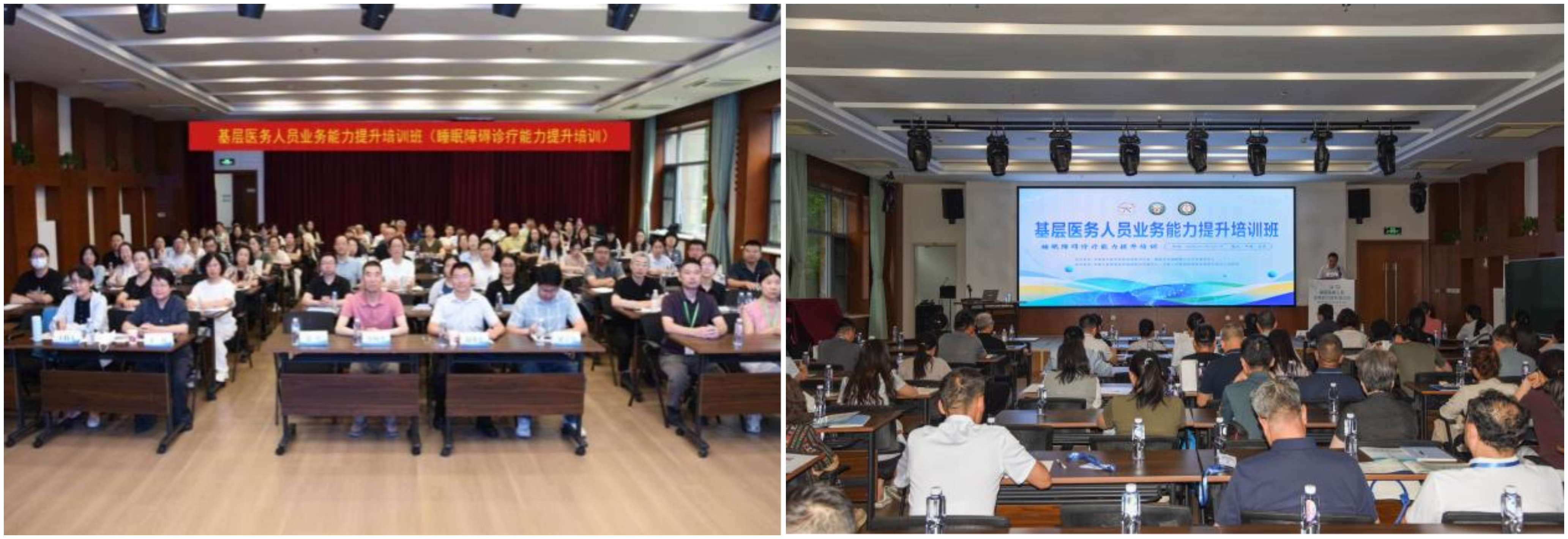
The "Deepening Grassroots Sleep Diagnosis and Treatment to Safeguard the Sleep Health of the Elderly - Training Course for Enhancing the Sleep Disorder Diagnosis and Treatment Capabilities of Grassroots Medical Staff" was successfully held in Beijing
From July 15th to 19th, 2026, the "Training Course for Enhancing the Professional Competence of Grassroots Medical Staff (Training on Enhancing the Diagnosis and Treatment Competence of Sleep Disorders)" was successfully held in Beijing, jointly organized by the Talent Exchange Service Center of the National Health Commission and the Telemedicine Branch of the Chinese Society of Geriatrics. This training closely follows the work deployment of the "Pediatric and Mental Health Service Year Action (2025-2027)", focusing on the core sleep health needs of the elderly group. With the goal of filling the gap in sleep diagnosis and treatment capabilities at the grassroots level and promoting the downward allocation of high-quality medical resources, it upgrades sleep health to a national initiative. Through top-level design, resource downward allocation, and multi-departmental collaboration, Promote the transformation of sleep health management from individual awareness to national action, and build a sleep health security system covering the entire life cycle, making it a key cornerstone for the construction of "Healthy China". The training attracted over a hundred grassroots clinical physicians, nurses and medical technicians from across the country to participate in a four-day systematic study. Professor Zhang Meikui, the director of the Telemedicine Branch of the Chinese Geriatrics Society and from the General Hospital of the People's Liberation Army, serves as the leading expert for this training.
With the continuous advancement of population aging, various sleep disorders such as insomnia and sleep apnea have become common chronic diseases among the elderly. Long-term sleep problems can induce damage to multiple systems including the cardiovascular and cerebrovascular, mental, and metabolic systems, seriously affecting the quality of life of the elderly. At present, primary medical institutions urgently need to accelerate the improvement of the multidisciplinary diagnosis and treatment system for sleep, strengthen the construction of clinical practical operation capabilities, and promote the implementation of standardized intervention plans. This training is based on the requirements of the hierarchical medical system construction, connecting the four major medical treatment tracks of medical psychology, neurology, respiratory critical care, and traditional medicine. It adopts an innovative model that combines theoretical teaching with clinical field research and study, building a deep communication platform between experts from tertiary hospitals and grassroots medical workers, and injecting professional impetus into the sleep health services for the elderly at the grassroots level.
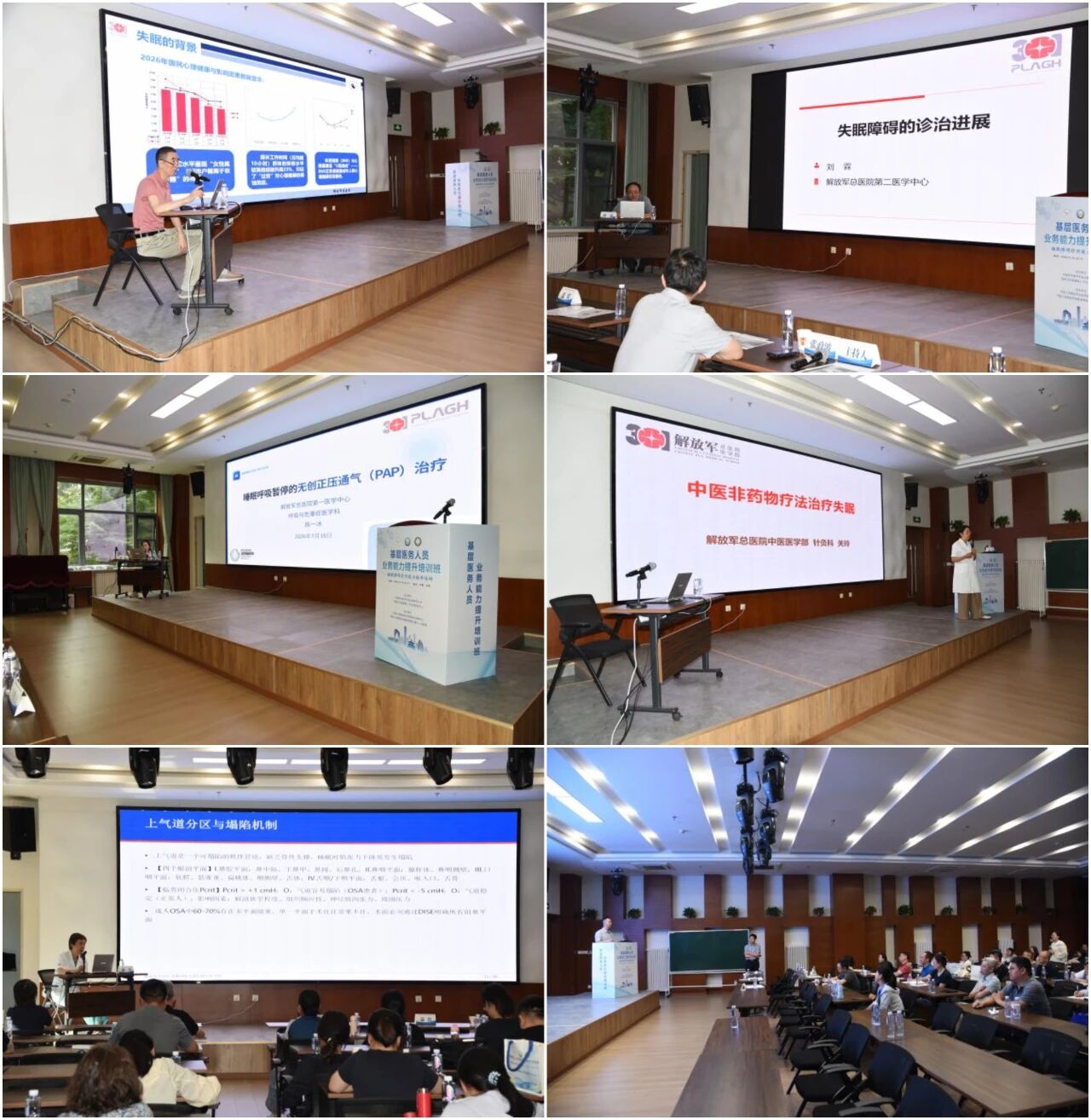
Multi-disciplinary experts give concentrated lectures, and the theoretical teaching closely focuses on the pain points of grassroots clinical practice
The theoretical teaching team of this training brings together the resources of chief physicians from several top-tier hospitals such as the General Hospital of the People's Liberation Army, Beijing Chaoyang Hospital Affiliated to Capital Medical University, Beijing Tiantan Hospital and Beijing Hospital of Integrated Traditional Chinese and Western Medicine. The teaching content combines policy height with clinical practical value.
The teaching is divided into two major sections: multi-disciplinary topic sharing and clinical case discussion. Experts conducted in-depth sharing on core topics such as multi-organ damage throughout the body caused by sleep apnea, standardized clinical application of non-invasive ventilators, intervention plans for sleep disorders associated with stroke, collaborative diagnosis and treatment of insomnia in the elderly with traditional Chinese and Western medicine, new physical sleep promotion technologies, and long-term health management of sleep chronic diseases in the elderly. They combined a vast number of real cases from the grassroots level to break down the full-process thinking of screening, diagnosis, intervention, and follow-up. The classroom is set up with an interactive discussion session. Grassroots medical staff from various regions raise clinical concerns based on the current situation of sleep clinic construction in their own hospitals. The teaching experts answer questions on the spot, exchange diagnosis and treatment ideas, and jointly explore a lightweight sleep service model suitable for grassroots levels, providing a clear and feasible path for the construction of sleep specialties at the grassroots level.
On-site study Tours at top-tier hospitals, immersive observation of the standardized sleep diagnosis and treatment system
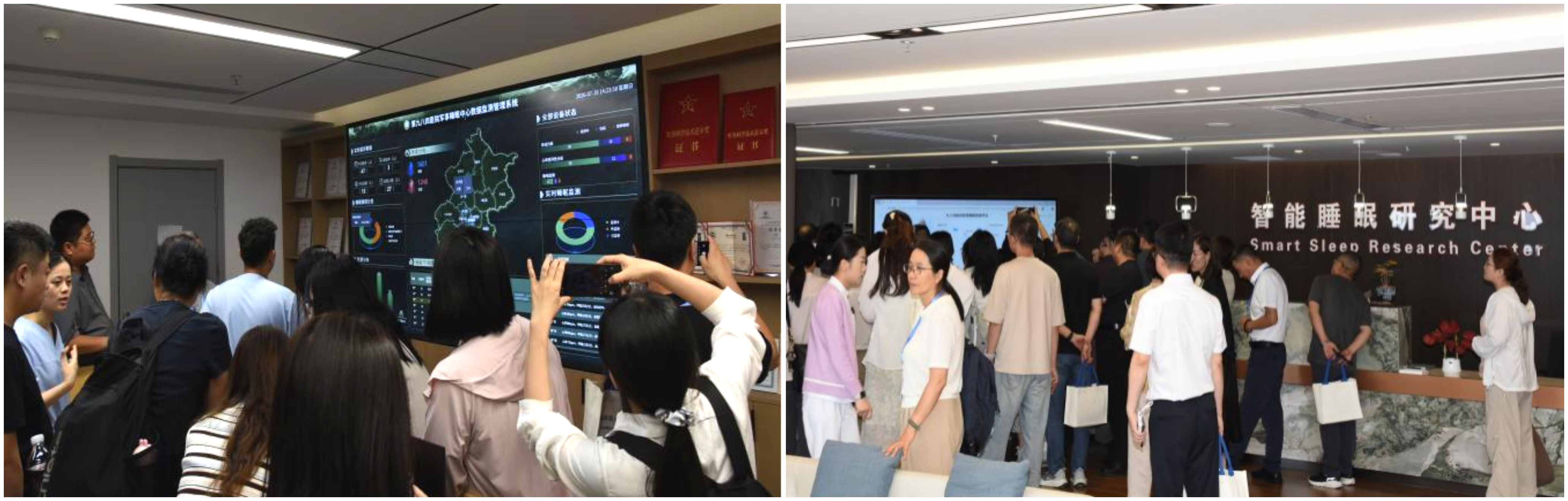
On July 19th, all the trainees went to the sleep medicine center of a tertiary hospital for an offline on-site study tour. The trainees were divided into groups and entered the sleep diagnosis and treatment area to observe on the spot the complete service process including polysomnography operation, non-invasive ventilation intervention for sleep breathing diseases, and the characteristic outpatient service of integrating traditional Chinese and Western medicine for sleep assistance.
Experts within the hospital demonstrated on-site the operation norms of the entire set of diagnostic and therapeutic equipment and the key points for interpreting monitoring data, sharing the mature experience of sleep chronic disease management and multi-disciplinary joint consultation operation of this tertiary hospital. Unlike pure theoretical classes, on-site study Tours enable grassroots medical staff to directly learn standardized and replicable operation models of sleep specialties, accelerate the construction of a sleep diagnosis and treatment service system that is coordinated from top to bottom and complementary in advantages, transform cutting-edge diagnosis and treatment technologies and mature service systems into practical plans that can be implemented at the grassroots level, and effectively enhance the service capabilities of the grassroots.
Diverse exchanges collide ideas and build a consensus on the development of sleep services at the grassroots level
During the four-day training period, in addition to specialized lectures and on-site observations, the trainees voluntarily engaged in group exchanges. Representatives from medical institutions across the country shared practical experiences in regional elderly sleep disease screening, home-based remote medical sleep health intervention, and the construction of grassroots sleep clinics, and learned from each other's characteristic service models.
Many trainees expressed that in the past, sleep-related diagnosis and treatment at the grassroots level mostly relied on the experience of a single discipline. This time, the multi-disciplinary integrated teaching broke through the limitations of their own diagnosis and treatment thinking, establishing a complete logic for the diagnosis and treatment of sleep diseases from multiple dimensions such as respiration, neurology, psychology, and traditional Chinese medicine. After returning, they will apply what they have learned to the daily diagnosis and treatment of elderly patients and optimize the supply of local sleep health services. This training has established a regular communication bridge for grassroots sleep medical workers across the country, laying a solid foundation for cross-regional medical experience sharing and technical assistance.
The training has been effectively implemented and the grassroots service network for elderly health has been continuously improved
The successful holding of this training course has effectively filled the gap of multi-disciplinary diagnosis and treatment talents in sleep at the grassroots level and improved the hierarchical diagnosis and treatment service chain for elderly health. Next, the Telemedicine Branch of the Chinese Geriatrics Society will collaborate with the National Health Commission's Talent Exchange Service Center and local tertiary medical institutions to continuously and deeply carry out various specialized training sessions on chronic disease diagnosis and treatment at the grassroots level. This will constantly enrich the learning carriers for enhancing the capabilities of grassroots medical staff and promote the continuous downward flow of high-quality technical resources in areas such as sleep, geriatric chronic diseases, and telemedicine. By enhancing the quality and efficiency of grassroots medical treatment capabilities, we contribute to the construction of a Healthy China and comprehensively safeguard the sleep health and life well-being of hundreds of millions of elderly people.
Written by Yang Qingnan
Photography: Chen Siyi
Prev
Notice of the Academic Conference on New Advances in Precision Diagnosis and Treatment of Cognitive Impairment of the Chinese Society of Geriatrics and the Training Course for Neuro-Psychological Assessors and Cognitive Impairment Caregivers
Next
The national continuing medical education project "Medical and Elderly Care Integration Care Management Professional Training Class" concluded successfully in Hefei in 2026