
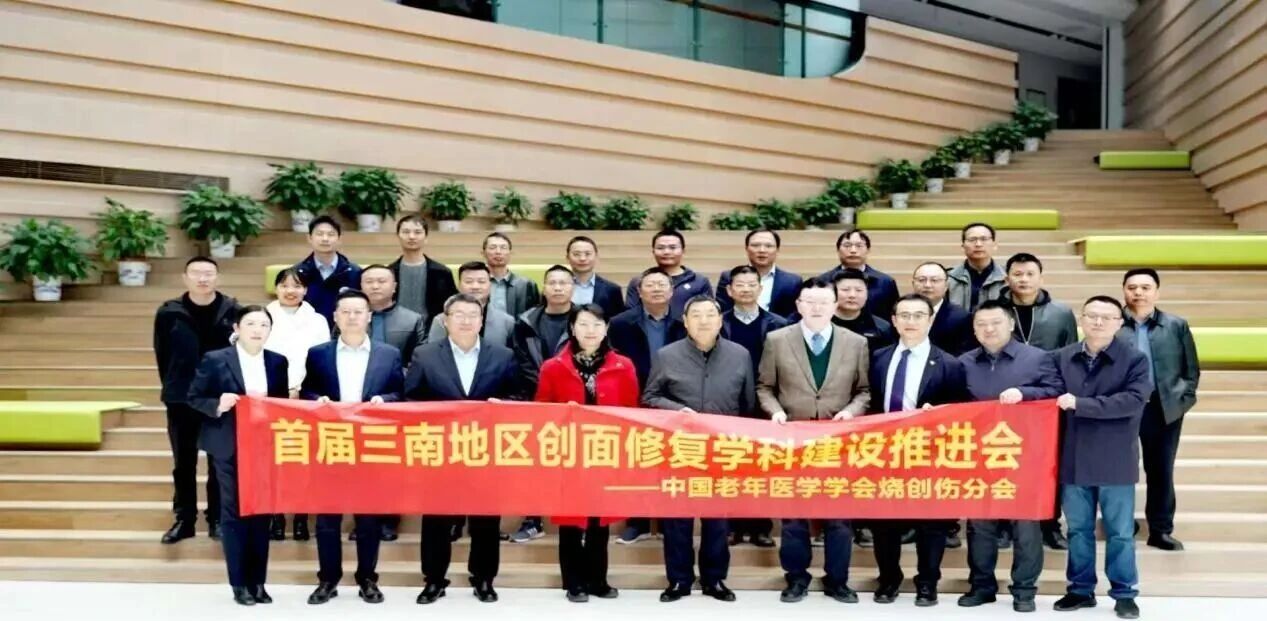
The first "Three South" Wound repair Discipline Construction Promotion Conference of the Burn and Trauma Branch of the Chinese Society of Geriatrics was successfully held in Ganzhou
In response to the national guidance on promoting the downward flow of high-quality medical resources and to facilitate the accelerated high-quality development of health and medical services in revolutionary old areas, the Burn and Trauma Branch of the Chinese Society of Geriatrics initiated and hosted the "Promotion Conference on Wound Repair Discipline Construction in the Three Southern Regions" (hereinafter referred to as the "Three Southern Conference"). The "Three Nannies" refer to southern Jiangxi, southern Anhui and Hainan. All three regions have a glorious revolutionary tradition and face similar challenges and demands in the distribution of medical resources. In recent years, under the continuous guidance and assistance of the Burn and Trauma Branch of the Chinese Geriatrics Society, the wound repair discipline in the "Three South" regions has been based on reality and has been exploring with determination, gradually forming development paths with their own characteristics: The "hospital-community-family" linkage model in southern Jiangxi, the "specialized alliance" integration model in southern Anhui, and the "wound repair + emergency rescue" fusion model in Hainan have accumulated valuable "Three Nans experience" for the construction of the grassroots wound repair system.
On November 27th, the "First 'Three South' Region Wound Repair Discipline Construction Promotion Conference" was successfully held in Ganzhou, Jiangxi Province, hosted by the Burn and Trauma Branch of the Chinese Geriatrics Society and organized by Ganzhou Hospital of Guangdong Provincial People's Hospital (Ganzhou Municipal Hospital). The conference brought together a group of academicians and experts led by Guo Guanghua, the president of the Burn and Trauma Branch of the Chinese Geriatrics Society, as well as representatives from medical institutions in southern Jiangxi, Hainan, southern Anhui and some counties and districts in Ganzhou, to jointly discuss the development blueprint of the wound repair discipline under the new situation. Guo Lili, the Party Secretary of Ganzhou Hospital of Guangdong Provincial People's Hospital, and Vice Presidents Zhu Shenghuang and Huang Zhifeng attended the meeting.
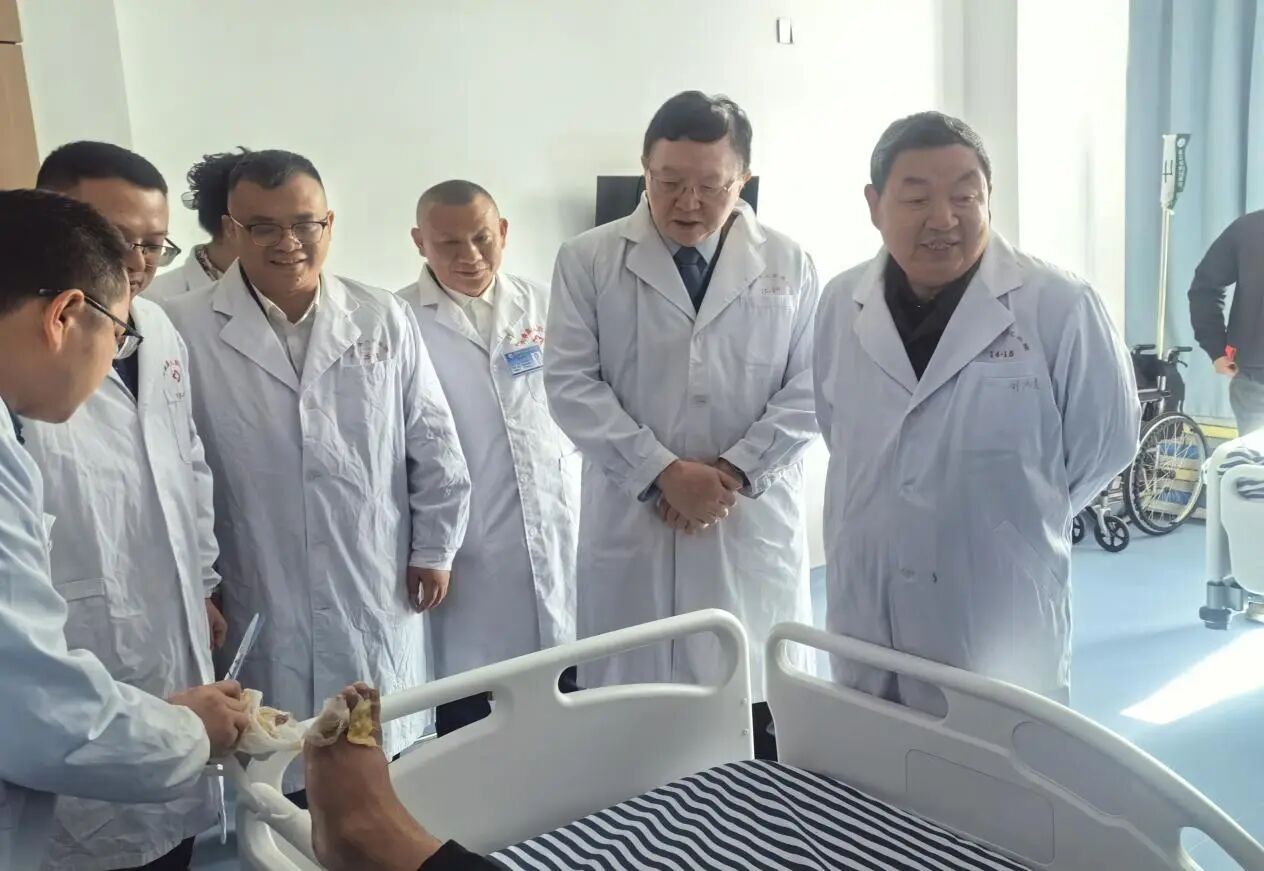
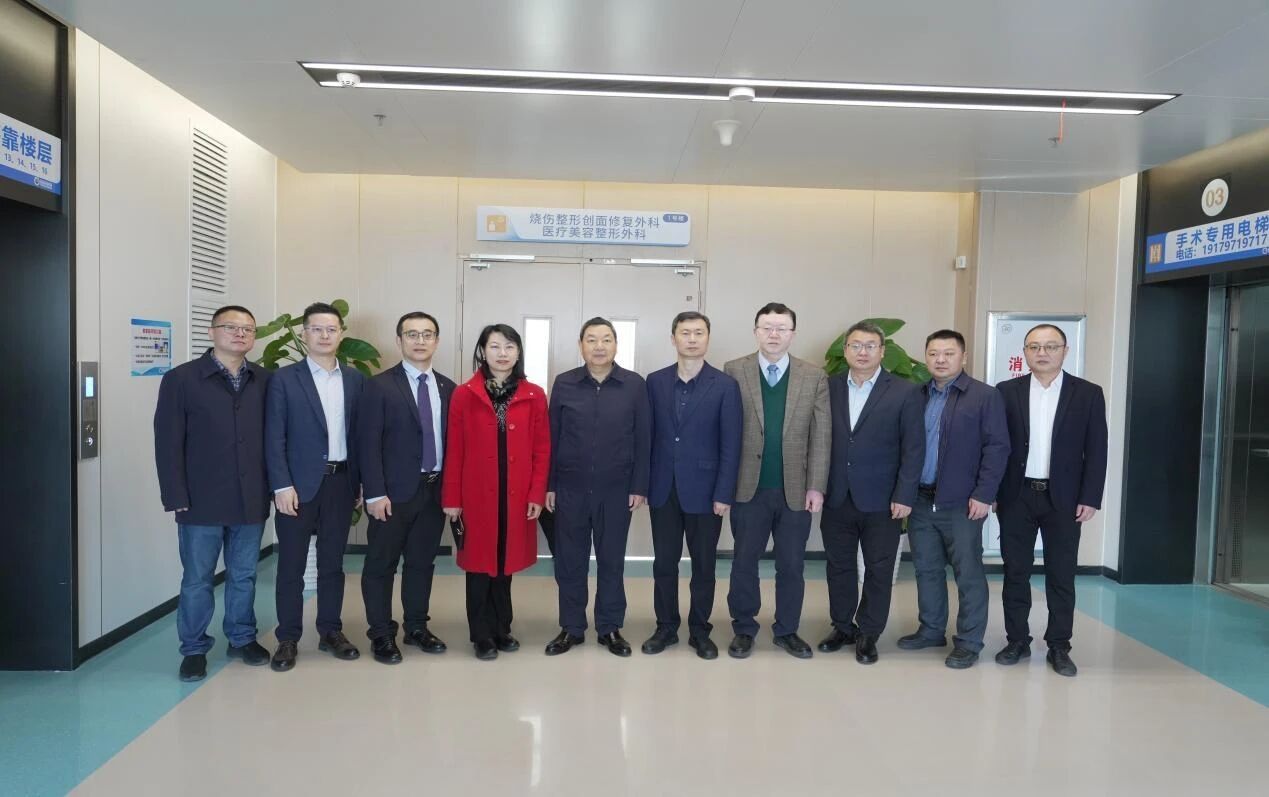
Before the meeting, the academician expert group, accompanied by the hospital's leaders, visited the medical main street and the plastic surgery and beauty clinic in the new hospital area on the spot, and conducted teaching ward rounds in the burn, plastic surgery and wound repair department. The experts gained a detailed understanding of the department's construction in terms of hardware facilities, talent teams, diagnosis and treatment processes, and quality management, and highly praised the department's phased achievements.
Experts lead the way to promote development, and disciplines unite to write a new chapter
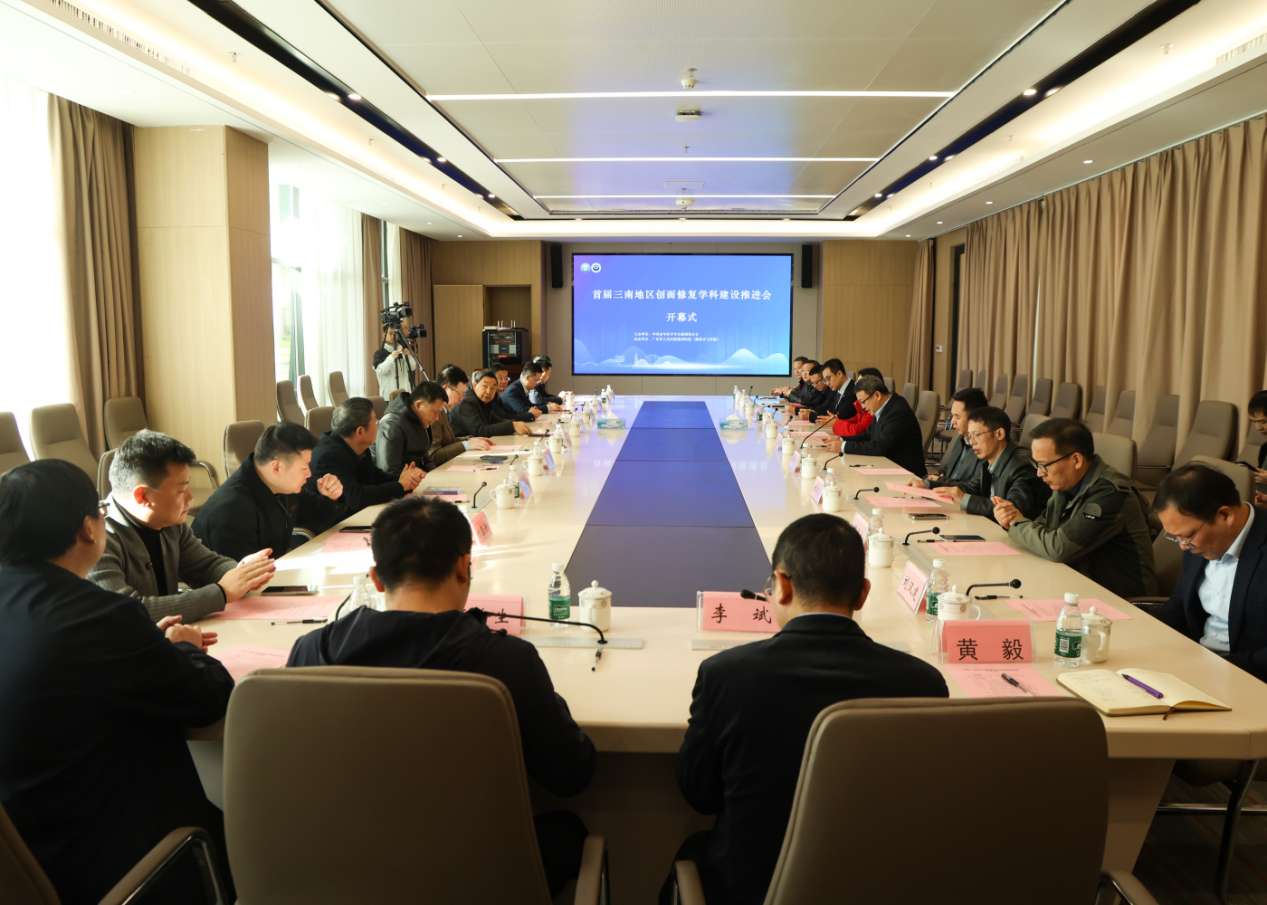
The opening ceremony of the first "Three South" Region Wound Repair Discipline Construction Promotion Conference was presided over by Zhu Shenghuang, the vice president of Ganzhou Hospital of Guangdong Provincial People's Hospital. Guo Lili, the Party Secretary of Ganzhou Hospital of Guangdong Provincial People's Hospital, said in her speech that since the hospital was fully entrusted and assisted by Guangdong Provincial People's Hospital, the overall development pace of the hospital has been stable. However, compared with the construction standards of national regional medical centers, it still needs to be continuously improved. The discipline of burn, plastic surgery and wound repair, as a key characteristic specialty cultivated by the hospital, is currently at a critical stage of quality improvement and capacity expansion. She looks forward to using this conference as a bond to establish a long-term and stable cooperative relationship with the Burn and Trauma Branch of the Chinese Society of Geriatrics, and continuously promote the high-quality development of the discipline and the hospital.
Guo Guanghua, the president of the Burn and Trauma Branch of the Chinese Geriatrics Society, pointed out in his speech that southern Jiangxi, Hainan and southern Anhui are all revolutionary old areas and face common problems in the capacity of specialized medical services such as wound repair. The holding of this "Three South Conference" aims to build a high-level and practical exchange platform for the three regions. Through mutual learning of development experiences and sharing of technical resources, they will work together to enhance the overall diagnosis and treatment level of wound repair in the region, thereby better safeguarding the health of the people in the old revolutionary base areas and strengthening the foundation of grassroots medical services.
During the special report session, Zhou Hua, the director of the Burn, Plastic Surgery and Wound Repair Department of Ganzhou Hospital of Guangdong Provincial People's Hospital, Cheng Shaowen, the director of the Wound Repair Department of the First Affiliated Hospital of Hainan Medical University, and Ding Wei, the director of the Wound Repair Surgery Department of the First Affiliated Hospital of Wannan Medical College (Yijishan Hospital), respectively systematically shared the innovative practice models of their respective regions.
Director Zhou Hua introduced in his report "Exploration of the 'Gannan Model' for the Specialized Construction System of Wound Repair" that the "Gannan Model" is a three-level linkage chronic wound prevention and treatment network of "hospital - community - family" constructed in response to the age structure characteristics of the population and the medical resource foundation in the Gannan region. This model clearly defines the functional positioning of the three-level institutions, realizes the upward shift of difficult and severe case treatment, and the downward shift of screening management and rehabilitation services. Through grid-based management, home-hospital collaboration and two-way referral mechanisms, it significantly increases the rate of chronic wound healing, reduces the burden on patients and the risk of disability, and at the same time strengthens the service capacity at the grassroots level. A scalable solution for chronic wound management has been provided for regions with the same medical resource base.
Director Cheng Shaowen pointed out in his report "Exploration of the 'Hainan Model' for the Construction of Wound Repair Specialties" that the prevention and treatment of refractory wounds is an important public health issue. In April 2021, the First Affiliated Hospital of Hainan Medical University was the first in the province to establish a department of facial repair. While strengthening its own internal construction, it is also focusing on building a province-wide diagnosis and treatment collaboration system. In particular, in light of the geographical and climatic characteristics of Hainan, the construction of wound repair capabilities has been innovatively integrated into the regional medical rescue system, forming the "Hainan Model" of "combining emergency and chronic conditions and integrating specialized rescue". This has effectively enhanced the level of rapid and standardized diagnosis and treatment, achieving a win-win situation for the development of the discipline and social benefits.
Director Ding Wei introduced in his report "Exploration of Regional Wound Repair Discipline Construction System - 'Wannan Model'" that the Wannan Wound Repair Specialized Alliance was established in April 2023 under the guidance of experts from the society. Currently, it has radiated to 43 secondary and above medical institutions in 6 cities. The alliance, with the Wound Repair Center of Southern Anhui as its core, adopts an organizational model of "central hospitals radiating and driving municipal and county-level hospitals", adheres to the principles of "facing the grassroots, serving the people, integrating disciplines, and standardizing and unifying", and through the intersection of multi-disciplinary technologies and regional collaboration, is committed to promoting the standardization, homogenization and systematization of the wound repair discipline in the southern Anhui region
During the discussion session, the representatives present engaged in a lively and in-depth exchange on common challenges faced in discipline construction, future development directions, and regional collaboration mechanisms. Academicians and experts pointed out in their speeches that the "Three South" model has achieved remarkable results and is an active implementation of the "Healthy China" strategy. With the intensification of aging and changes in the disease spectrum, the problem of chronic wounds has become increasingly prominent. Although various models follow different paths, they have formed professional and systematic development systems. Future discipline construction should focus on "improving quality", promoting innovation towards high-quality healing, functional recovery and regenerative repair. It should always adhere to the patient-centered approach, pay attention to humanistic care, and reduce the physical, mental and economic burdens on patients.
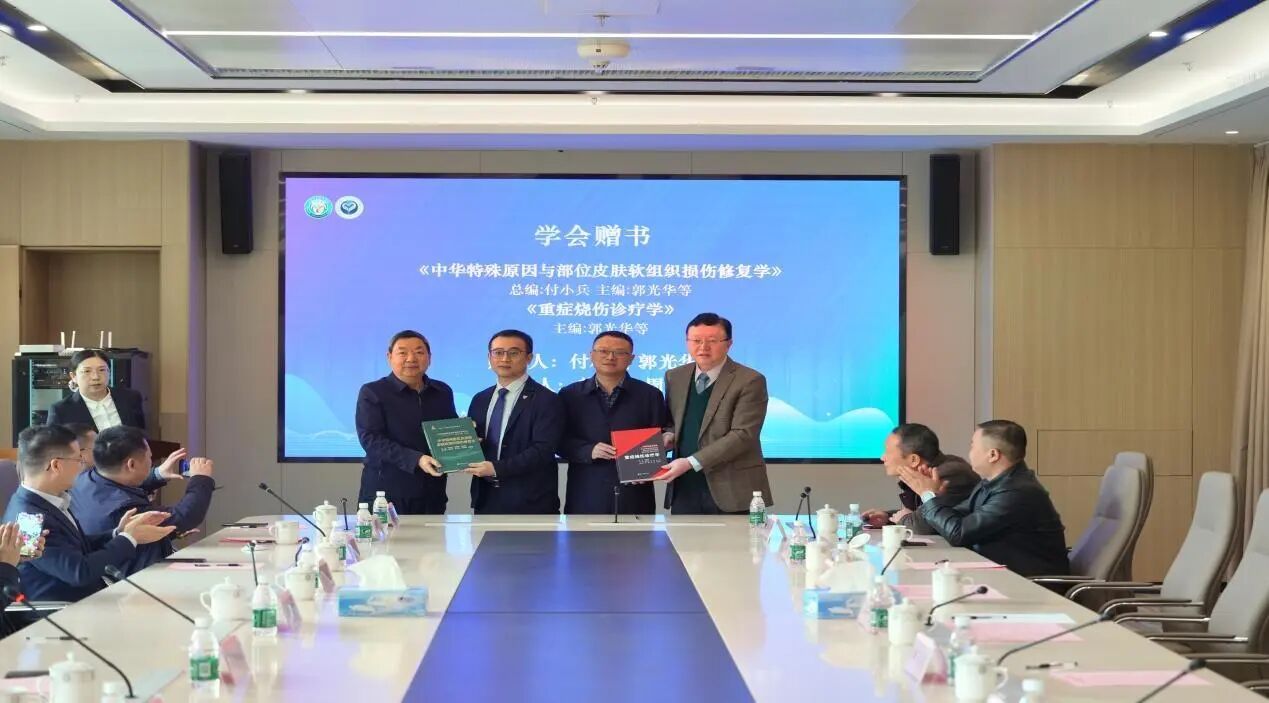
At the end of the meeting, a simple yet solemn book-giving ceremony was held. Representatives of the Burn and Trauma Branch of the Chinese Geriatrics Society presented two academic monographs to Vice President Huang Zhifeng and Director Zhou Hua: "Repair of Skin and Soft Tissue Injuries Due to Special Causes in China", edited by Academician Fu Xiaobing and Professor Guo Guanghua, and "Diagnosis and Treatment of Severe Burns", reviewed by Academician Xia Zhaofan and edited by Professor Guo Guanghua, With the aim of enhancing clinical capabilities and the level of discipline construction through knowledge dissemination.
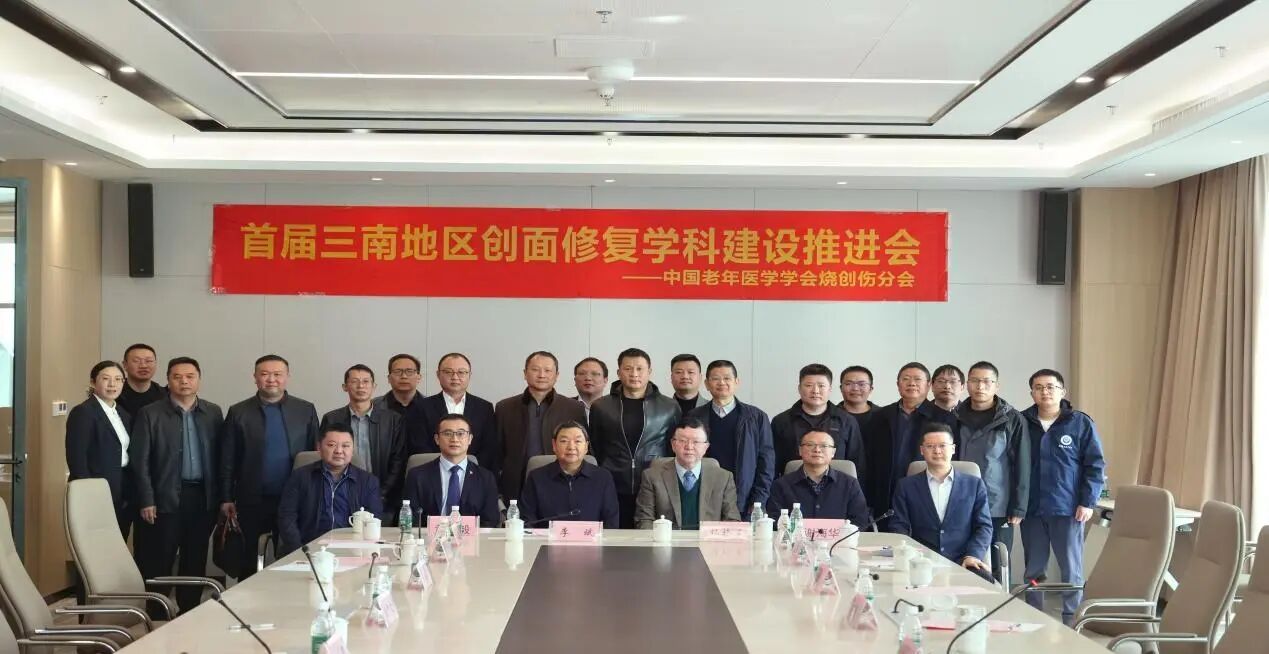
President Guo Guanghua concluded that the successful holding of the first "Three South Conference" is an important practice of the branch in actively responding to the national call for the allocation of high-quality medical resources to the lower levels and serving the health and wellness cause in revolutionary old areas. It is also a beneficial exploration to promote the coordinated development of regional wound repair disciplines. Through in-depth exchanges and experience sharing at the first conference, the "Three South" regions have initially formed a development pattern with distinct characteristics and mutual learning, providing a replicable and scalable model reference for the construction of the grassroots wound repair system. The "Three South Conferences", as a brand series of exchange activities created by the Burn and Trauma Branch, will operate under a mechanism of rotating hosts, academic societies taking the lead, and themes following. It will be held in southern Anhui next year.
Looking ahead, the Burn and Trauma Branch of the Chinese Society of Geriatrics will continue to play the role of a bridge and platform, adhering to academic leadership as the core and regional collaboration as the path. It will further integrate expert resources, technical forces and policy support to help the wound repair discipline in various regions achieve high-quality development in terms of standardization construction, talent cultivation, technology integration and service network construction. Contribute our due professional strength to the implementation of the Healthy China strategy and the promotion of the health of all citizens.