
The fifth Standing Committee Working Meeting of the Vertigo/Vestibular Medicine Branch of the Chinese Geriatrics Society was held in Beijing
On May 22, 2026, the fifth Standing Committee Working Meeting of the Vertigo/Vestibular Medicine Branch of the Chinese Geriatrics Society (CGSVD) was successfully held during the fifth General Committee Meeting and the fifth academic conference. Professor Yang Xu, the president of the branch, vice presidents and over 50 standing committee members from all over the country attended the meeting.
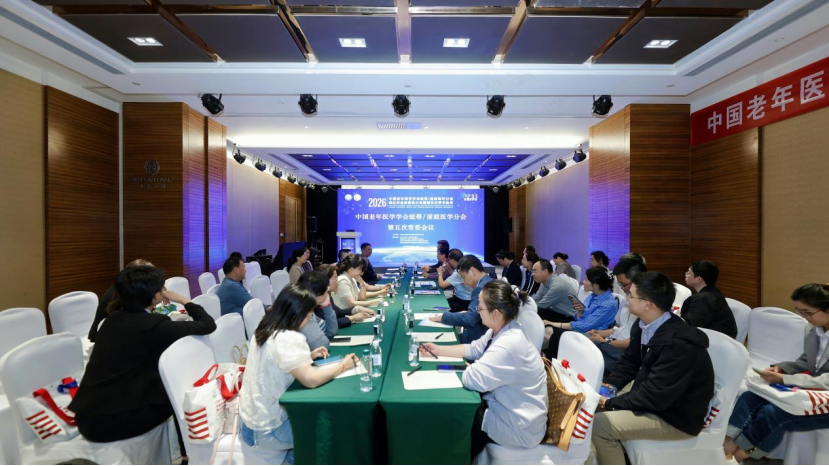
The meeting was addressed by Professor Yang Xu, the president of the branch. Subsequently, Professor Chang Liying, the vice president and general director of the branch, delivered the 2025 annual work report on behalf of the branch. The report indicates that in 2025, the branch made positive progress in academic exchanges, continuing education, standard construction, scientific research and popular science, etc. In May, the fourth General meeting of all committee members and academic conference was successfully held, attracting approximately 650 participants, covering multiple fields such as vestibular basic medicine, neuroscience, ophthalmology, imaging, psychology and pharmacy. Committee members in various regions have continuously carried out regional academic activities and grassroots training to promote the downward flow of vertigo disease diagnosis and treatment capabilities. Completed the proofreading, translation and publication of the book "Anatomy and Physiology of the Vestibular System", and promoted the formulation of three group standards. Published many high-level papers in domestic and international journals, and achieved phased results in scientific research work. Throughout the year, more than 20 science popularization lectures and free medical consultations were held, covering over ten provinces, autonomous regions and municipalities. Over 300 medical staff participated and more than 10,000 people benefited. At the same time, 68 new committee members were added, further optimizing the talent team and organizational structure.
The meeting conducted in-depth discussions on the key tasks for 2026 and formulated ten annual work plans: First, to enhance multi-disciplinary academic exchanges and make thorough preparations for the sixth academic conference; The second is to promote the translation, compilation and publication of works related to vertigo and vestibular medicine; Third, organize online training, case discussions and special topic discussions around common clinical problems, and strengthen standardized training. Fourth, we will continue to promote the construction of professional collaborative co-construction bodies and enhance the homogenization level of grassroots services. The fifth is to enhance the standardized training and capacity improvement of vestibular function examination and rehabilitation technicians. Sixth, deepen the collaboration between clinical practice and scientific research to promote the production and transformation of high-quality achievements; Seventh, promote the construction and sharing of multi-center databases, with a focus on supporting the accumulation of data in areas such as the etiology of vestibular diseases and vestibular migraine. The eighth is to expand the coverage of patient education, carry out health lecture halls and grassroots publicity and education activities; The ninth is to continuously promote continuing education projects, organize academic conferences, salons and lecture Tours; The tenth is to accelerate the formulation of relevant guidelines, consensus and group standards.
During the discussion session, members of the Standing Committee had in-depth exchanges on topics such as the path and assessment of standardized training for vertigo diagnosis and treatment at the grassroots level, process unification and quality control in the construction of collaborative co-construction units, and the application of multi-center databases in scientific research collaboration and case follow-up. The experts attending the meeting unanimously agreed that it is necessary to further enhance internal collaboration within the branch, promote the closed-loop construction of "academic exchange - standardized training - clinical application - data accumulation", and continuously improve the diagnosis and treatment capabilities and disciplinary influence of vertigo/vestibular medicine.
The meeting emphasized that it is necessary to adhere to the Party building leading the construction of the branch and deeply integrate the Party building work with the business work. The branch will thoroughly study and implement the important instructions of the Central Committee of the Communist Party of China on health and wellness work, guide all committee members to enhance the "Four Consciousnesses", strengthen the "Four Confidences", and achieve the "Two Safeguards", and ensure that all the work of the branch always proceeds in the correct political direction. At the same time, we must firmly establish and practice the correct view of political achievements, adhere to the development philosophy centered on people's health, take serving patients, the grassroots and the people as the starting point and ultimate goal of our work, resolutely prevent the tendency of "emphasizing form over effect and quantity over quality", and truly transform academic achievements into accessible and perceptible medical services for the grassroots and patients. Focus scientific research and innovation on the real clinical needs, implement standardized training and popular science public welfare in a practical way, and test the achievements of the branch construction with solid work results.
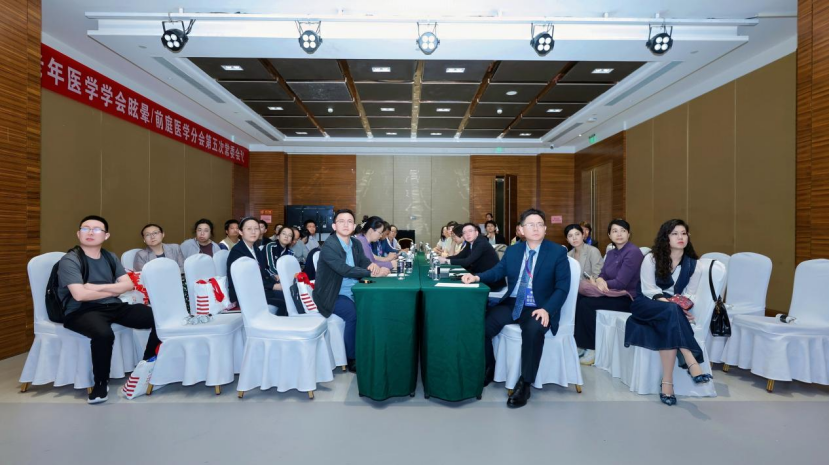
At the end of the meeting, President Yang Xu made a concluding speech. He emphasized that the branch will continue to play an organizational and academic leading role, unite all standing committee members and member units, closely focus on clinical needs and the key points of discipline development, and under the leadership of Party building, steadily advance academic activities, standardized training and professional construction. It will firmly establish a correct view of political achievements, continuously improve the clinical diagnosis and treatment level of vertigo diseases, and promote the work of the branch to a new level.