
Anchoring norms to Promote Development and Uniting efforts to embark on a New Journey - The First executive meeting of the Third Council of the Chinese Society of Geriatrics was held in Tianjin
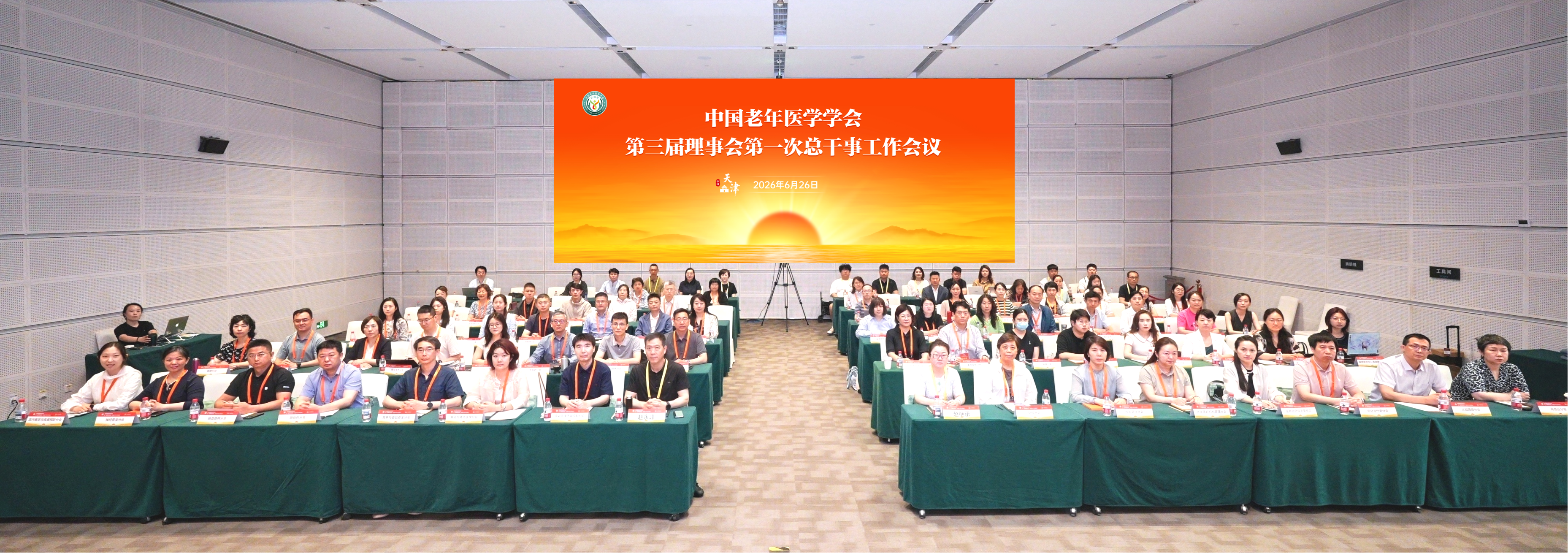
On June 26, 2026, the first executive meeting of the third Council of the Chinese Geriatrics Society was grandly held at the National Exhibition and Convention Center (Tianjin). The meeting aims to further strengthen the overall awareness and sense of responsibility of the branches, adhere to the principle of gathering development synergy under the leadership of Party building, consolidate the operational foundation through standardized governance, unify ideological understanding, clarify development paths, and strengthen bottom-line thinking. It comprehensively deploons the key tasks for 2026, and promotes the high-quality development of all undertakings of the society from a higher position and with a more practical style. The meeting was presided over by Zhao Yongfeng, the deputy secretary-general and director of the office. More than a hundred representatives from various branches, including the chairpersons, vice-chairpersons and general secretaries, attended the meeting.
At the beginning of the meeting, Academician Fu Xiaobing, the president of the society, delivered an important speech and, as the "first topic" of the meeting, gave a special Party lesson on "Establishing and Practicing the Correct View of Political Achievements" to the representatives present. He emphasized that it is necessary to establish a correct view of political achievements, strengthen the bottom-line thinking, adhere to the leadership of Party building, take precautions to prevent risks, truly engrave the requirements of "upholding politics and adhering to the bottom line" in one's mind, and ensure that all work is compliant and legal.
Professor Cao Feng, the executive vice president of the society, delivered the opening speech, fully affirming the achievements made by each branch in the past year and highly praising the "hub" role played by the general secretary team in the construction of the society. It is required that branches strengthen standardized management, enhance operational efficiency through institutionalized and scientific management methods, and truly implement the requirements of "learning norms and improving efficiency" in their actions. Focus on key tasks, truly take the requirements of "grasping key points and creating brands" on our shoulders, and spare no effort to successfully hold the "12th China Geriatrics and Science and Technology Innovation Conference", and build a benchmark brand of academic societies with industry influence.
Under the high attention and meticulous guidance of leaders at all levels of the society, the Secretariat made overall arrangements and organized carefully. It closely followed the actual needs of the daily work of the branches, scientifically set up the meeting content, and focused on strengthening the risk prevention awareness and compliance management capabilities of each branch. For this purpose, the meeting first invited Professor Zeng Qiang, the executive vice secretary-general and deputy director of the expert committee, to give a lecture on the new regulations of the branch management measures, aiming to further consolidate the foundation of compliance in running the meeting.
Subsequently, the responsible persons of the relevant departments of the society respectively provided systematic training and explanations on matters needing attention for financial reimbursement, compliance of academic projects, operation of the member service management platform, key points of information publicity work, and public opinion supervision. The training is based on the actual daily work, directly addressing the real problems and tough issues encountered by each branch in its operation. It aims to help each branch effectively enhance its compliance operation capabilities and refined management levels through in-depth interpretation of standardized processes, truly achieving the transformation of capabilities from "knowing the norms" to "skillfully using the norms".
As one of the important agendas of this conference, the meeting has made comprehensive preparations and mobilization for the "12th China Geriatrics and Science and Technology Innovation Conference" which is scheduled to be held in October this year. The representatives attending the conference conducted an on-site inspection of the conference venue at the National Exhibition and Convention Center (Tianjin), and confirmed and coordinated the implementation of the venue allocation plan for each sub-forum on the spot, laying a solid foundation for the smooth holding of the conference.
The meeting also clearly pointed out that the attendance rate of the Director-General will be included in the annual assessment indicators, fully reflecting the society's work orientation of "promoting implementation through standardization and strengthening governance through systems". The representatives attending the meeting all expressed that this meeting was not only a work deployment meeting but also a "recharging" session for enhancing capabilities. The training content was "quenching thirst" and practical, clarifying the thinking and identifying the key points for each branch under the new situation. In the future, they will translate the spirit of the meeting into concrete actions and steadily promote the implementation of all tasks.
The successful convening of this meeting marks that all the work of the Chinese Society of Geriatrics in 2026 is proceeding in an orderly and comprehensive manner. By making concerted efforts in technological innovation and brand building, we will widely pool the wisdom and strength of geriatric medicine workers across the country. With more vigorous fighting spirit and more practical measures, we will strive to write a new chapter of high-quality development in geriatric medicine and make new and greater contributions to the construction of a Healthy China and the health and well-being of the elderly.